
The Vatican Observatory does serious science: new discovery

The Vatican Observatory continues to contribute to our understanding of the Universe. The latest discovery by Jesuit astronomers presents a new description of gravity through an original approach.
The Vatican Observatory continues to surprise the scientific world.
Father Gabriele Gionti and Don Matteo Galaverni have developed a new description of gravity.
The Vatican Observatory’s Latest Discovery
At the heart of the study, published in the European Journal of Physics, is a proposal for two distinct ways to describe gravity when a “scalar field” is involved—a kind of physical field that fills the universe.
These two frameworks, known as the “Jordan frame” and the “Einstein frame”, describe the same physics but can also lead to surprising new solutions to the equations that govern the universe.
To demonstrate this, the Vatican researchers used an advanced mathematical method known as the ADM-Hamiltonian formalism, which takes into account equations found at the “boundaries” of space-time. Many previous studies overlooked these boundaries, resulting in incomplete equations.
Finally, Father Gionti and Don Galaverni examined how switching from one frame to the other can reveal new solutions in gravity—such as black holes or naked singularities—that would remain hidden if only one framework were used.
In short, this discovery shows that the mathematical framework used to describe the universe is not just a matter of style: it can genuinely influence the physical realities we uncover.
The Vatican Observatory’s Contributions in Recent Years
This is not the first time the Vatican Observatory has surprised the academic world with its contributions.
Back in 2022, as reported by UCCR, Vatican astronomers announced two new discoveries within our solar system.
They identified two celestial objects, named 2021 XD7 and 2021 XK7, which turned out to be Earth’s Trojan asteroids—bodies that share the Earth’s orbit around the Sun but remain in stable positions due to the gravitational balance between the Sun and Earth.
A far from marginal discovery, as these objects may provide crucial clues about the formation of the solar system and the evolution of primordial matter.
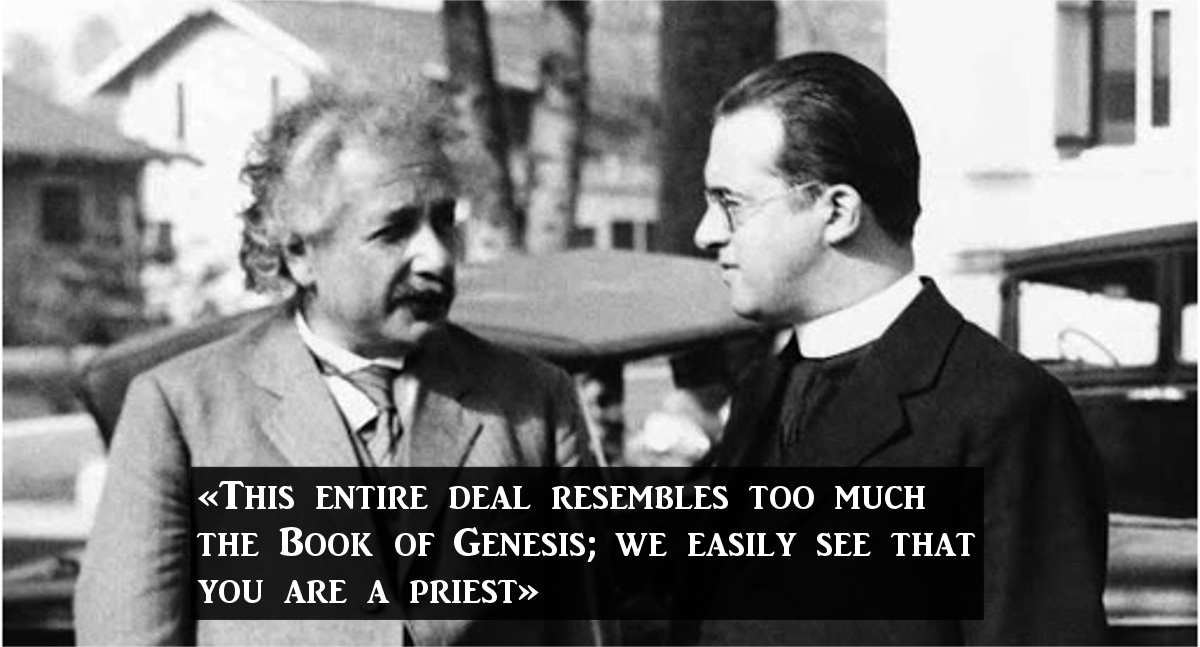
Previously, the Vatican Observatory made headlines with another remarkable study that in some way “went beyond” Albert Einstein, offering a radically new mathematical understanding of the Universe’s initial moment.
The Friendship Between Science and Faith in the Vatican
The discoveries of the Vatican Observatory are not accidental, but the result of the steady work of an institution that—though little known to the general public—boasts a history of excellence in astronomical research.
Officially founded in 1891 by Leo XIII, the Observatory is now based in the Vatican Gardens and also operates a modern research center in Arizona, at the Mount Graham International Observatory. It is far from a nostalgic relic; it is a continuously active laboratory.
Here, believing astronomers study the cosmos with the same passion and rigour as their secular colleagues, contributing to scientific progress with humility and dedication. Their faith is not a hindrance but a source of inspiration: to look at the sky is also to contemplate the mystery of existence, the beauty of the universe, and humanity’s place within it.
And every new discovery, like this original description of gravity, is a way to draw a little closer to that Truth which science and faith, each with its own tools, have always sought.
Author









0 commenti a The Vatican Observatory does serious science: new discovery