
Synodality Under Scrutiny: Cardinals Raise Serious Questions
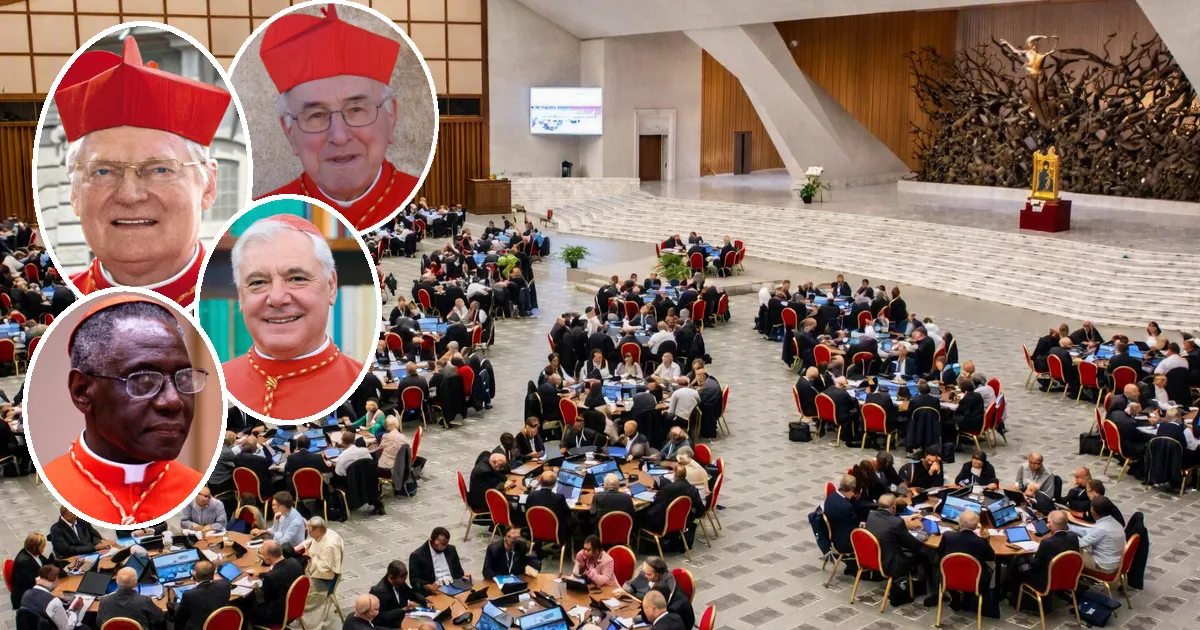
Several cardinals are voicing synodality doubts, urging the Church to carefully consider how this approach should serve ecclesial communion and mission.
The debate over synodality remains very much alive in the Church.
Some reject it outright, others promote it as an anticipated form of democracy and progress, while others simply call for its meaning to be clarified.
And there are many positions in between.
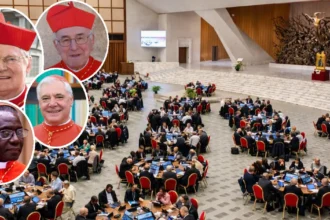
The debate is also taking place among bishops and cardinals themselves, ahead of the 2028 ecclesial assembly, which will assess the synodal process and its implementation.
Stay up to date by subscribing to our new channels:


Cardinal Scola: Church or Parliament?
A particularly significant position has been expressed by Cardinal Angelo Scola, Archbishop Emeritus of Milan.
In a recent interview, he argued that synodality «must» have a future in the Church, so that «the attempt to give form to communal action can become an effective way of putting Christian life into practice».
The former Archbishop of Milan, however, also warned against the risk of turning the Church into a kind of parliament.
For Scola, the starting point is therefore not synodality itself, but communion: synodality must be a method at the service of ecclesial life, rather than becoming the Church’s organizing principle.
As a Bishop, What I Think of the Synod’s Synthesis Report
(27/10/2025)
Brandmüller and the Protestant Influence
The judgment of Cardinal Walter Brandmüller is much more direct.
The Church historian recently distinguished between the Catholic synod and a democratic conception of synodality which, in his view, would be influenced by the Protestant model developed by Luther in the 16th century.
The main issue concerns the idea of giving everyone an «equal voice», laypeople and pastors alike, through democratic procedures. Such a model, Brandmüller argues, would be incompatible with Catholic ecclesiology.
He also proposed restoring greater importance to «synods of the particular Churches», provided that they remain faithful to the hierarchical structure of the Church.
What Is Synodality? A Useful Clarification of Its Distortions
(18/09/2025)
What Is Its Purpose? The Question Raised in the Netherlands
From the Netherlands came a strongly critical position from Auxiliary Bishop Rob Mutsaerts.
In a letter to Leo XIV, he asked whether the entire synodal process is actually bringing people closer to Christ and salvation.
In his view, the Church should not become a permanent «listening organization», but should clearly proclaim what human beings are called to.
His bishop, Gerard de Korte, publicly criticized Mutsaerts’ decision to address the Pope through an open letter, while not commenting on the substance of his objections.
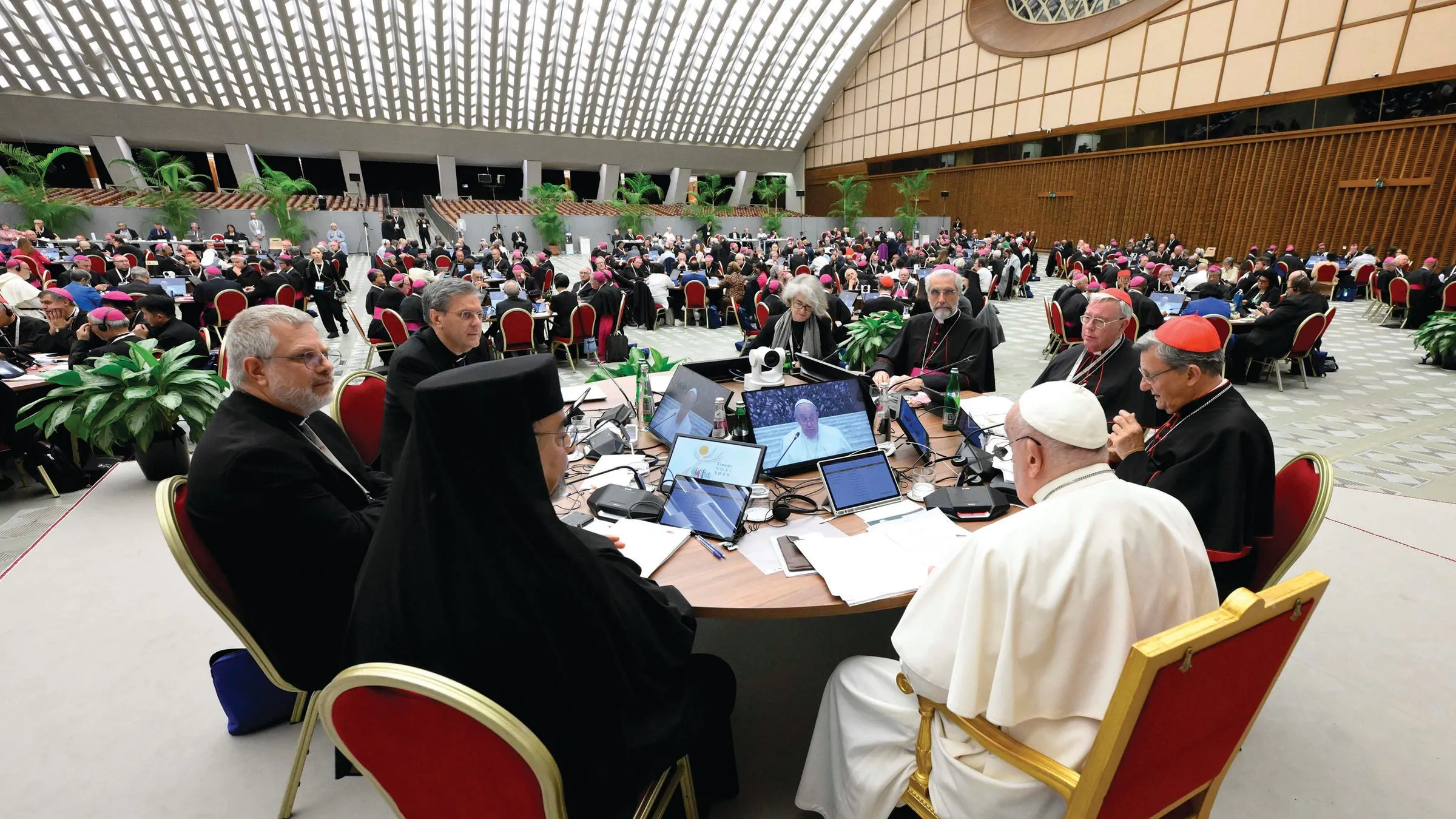
Synodality: Cardinal Sarah’s Doubts
Cardinal Robert Sarah, Prefect Emeritus of the Dicastery for Divine Worship and the Discipline of the Sacraments, made a particularly significant point: «Communion is an end; synodality is a means, to be tested».
In other words, synodality is not an end in itself but must be assessed according to its capacity to serve ecclesial communion.
On the same occasion, again speaking about synodality, the Guinean cardinal observed that it should be «theologically grounded in the notion of communion, which is much older and richer, also in order to avoid ideological distortions».
Synodality: The Bishop Remains the One Who Makes Decisions
(13/06/2026)
Müller: Risks to the Church’s Hierarchy
Cardinal Gerhard Ludwig Müller, Prefect Emeritus of the Congregation for the Doctrine of the Faith, has also criticized the proposal to replace the Church’s hierarchical model with a democratic process, going so far as to call it a «sin against the Holy Spirit».
He subsequently returned to the issue, stating that during the two sessions of the Synod he had personally witnessed a process that was allegedly being used to weaken the Church’s hierarchical-sacramental structure and replace it with a kind of «upside-down pyramid».
While challenging a widespread interpretation of the synodal process, Cardinal Müller acknowledges in synodality «the principle of shared responsibility». Because «we cannot say that one part of the Church, such as the laity, is passive, while another, the Magisterium and the bishops, is active. We have a shared responsibility».
What Is Catholic Synodality?
The comparison between these positions therefore shows that the issue is not simply being «for» or «against» synodality. It would be immature to reduce the debate to this, although some unfortunately do.
Rather, the question is which form of synodality is truly compatible with the nature of the Catholic Church: a method capable of fostering communion and the shared responsibility of the faithful, without turning the Church into a democracy or losing sight of its sacramental and hierarchical structure.
A reassurance in this regard came three months ago from a conference attended by Cardinal Mario Grech, Secretary General of the General Secretariat of the Synod.
Author




0 commenti a Synodality Under Scrutiny: Cardinals Raise Serious Questions