
Jesus never claimed to be God? A scholar proves otherwise
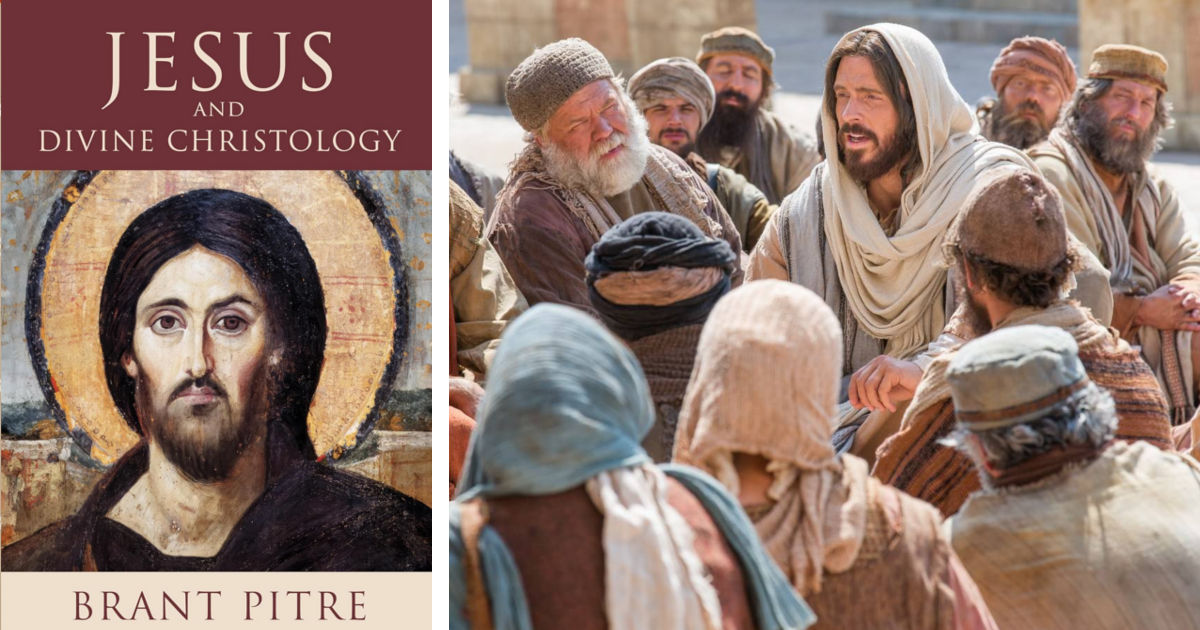
Jesus is not God and never claimed to be. This is the new battle against Jesus, the subject of the new book by Catholic theologian Brant Pitre. A study of historical sources that shows how Jesus acted and spoke as though He were God.
The challenge to the foundations of Christianity has long shifted from denying the existence of Jesus to denying the divinity of Jesus Christ.
One of the leaders of those who portray Jesus of Nazareth as an apocalyptic visionary is Bart D. Ehrman, a professor of New Testament at the University of North Carolina.
In Italy, he is (still) little known, unlike in the Anglo-Saxon countries, where a team ensures him excellent visibility on the web and social networks.
Jesus is not God: The current challenge to the foundations of Christianity
His historical thesis, as we have already seen, is that Jesus is not God and never claimed to be God, nor did He ever imply it.
On this assumption, he built his editorial empire, and more recently denied the so-called “high Christology”, that is, the immediate development of the belief in the divinity of Jesus among the disciples after the resurrection.
Therefore, the constant release of studies examining the divinity of Jesus while taking these materialistic assumptions seriously is important.
The new study on the divinity of Jesus: He spoke as God
The most recent case is the work of Brant Pitre, Catholic theologian and professor of Sacred Scripture at the Augustine Institute (Colorado).
The title is “Jesus and Divine Christology“ (Eerdmans 2024) and it answers exactly the question of whether Jesus of Nazareth was God or ever proclaimed Himself to be God.
Pitre begins by observing that many scholars, on the one hand, deny that Jesus claimed His divinity, but at the same time acknowledge that the early Church embraced the belief in the divinity of Jesus from the very beginning (“high Christology”).
How is this possible? Why did the early Christians embrace the divinity of Jesus if He Himself never claimed it? The scholar demonstrates the most common hypothesis in the book:
“The most convincing explanation for why Jesus’ first Jewish followers believed in His divinity shortly after His death is that Jesus Himself spoke and acted as though He were divine during His life”.
It is not enough, in fact, to quote a few passages from the Gospels where Jesus expresses His divine nature, while there are indeed few references in the three synoptic Gospels (Mark, Matthew, and Luke), the fourth Gospel (John) is still discredited in much of the academic world as unreliable and full of theology.
Pitre’s merit lies in dismantling this view, demonstrating that even in the synoptics, there is evidence of Jesus’ claimed divinity.
The analysis of the historical context and the divinity of Jesus
Indeed, Jesus seemed to be very cautious about His divinity, so much so that Anglican Bishop John A.T. Robinson called this topic a “forbidden ground” for biblical scholars. He did not want to expose Himself immediately in a blatant manner and seemed to prefer a gradual pedagogy with His disciples, revealing Himself slowly.
Pitre illustrates and analyzes numerous Gospel episodes where it clearly emerges that Jesus acts and speaks as if He were God, even though He did not openly manifest it. Especially when analyzing the historical and religious context of the 1st century, the area of expertise of the theologian and author of the book.
One example among many: Jesus requires the disciples to love Him more than their parents.
Today, this does not seem like a divine claim, but it is enough to immerse oneself in the Jewish context of the time to discover that only God could make such a claim. Rabbi Jacob Neusner confirmed this by admitting that such a request could only then be made by the God of Israel.
The kingdom of God, already and not yet in Jesus
There are many such episodes, not to mention Jesus’ clear and direct statements about referring to Himself as the Son of Man (Mt 19:28 / Lk 22:30). This would deserve a separate chapter.
There is also the theme of the “already and not yet”, which biblical scholar J.P. Meier has elaborated on at length, for whom, if it is true that Jesus referred to a future and imminent eschatology, at the same time “He explains that ‘the kingdom of God is in your midst’ (Lk 17:21)”1J.P. Meier, A Marginal Jew: Mentor, Messages, and Miracles, vol. 2, Queriniana 2003, p. 257, manifesting that “the period of Israel ends and the period of Jesus begins”2J.P. Meier, A Marginal Jew: Mentor, Messages, and Miracles, vol. 2, Queriniana 2003, pp. 243, 244.
The most consistent reading with the historical sources is Jesus’ proclamation of the Kingdom of God not yet arrived, but already present in His own ministry through the enactment of divine presence in healings, exorcisms, and sharing meals with sinners.
This is the truth that Ehrman and other scholars who base everything on this theme clash with, aware that, as Flannery O’Connor said, if Christ were only a man, no one would care.
As shown most recently by Pitre, however, there are solid historical grounds for Jesus’ claim to divinity. A claim understood by His disciples and even His opponents.










0 commenti a Jesus never claimed to be God? A scholar proves otherwise