
The Oral and Written Tradition on Jesus Before the Gospels

What sources did the Gospel writers rely on? A closer look at the written texts preceding the Gospels and the oral tradition concerning Jesus, addressing objections regarding its reliability.
What happened between the death of Jesus of Nazareth and the earliest written sources?
We are referring to the pre-Gospel traditions, that is, the transmission of stories about Jesus and his sayings, passed on by eyewitnesses orally and in writing to the early Christian communities.
This topic has already been addressed by UCCR in the past, explaining why the four Gospels are considered independent sources from one another.
Written sources predating the death of Jesus
First, there is the issue of the written sources that precede the Gospels. According to renowned American biblical scholar J.P. Meier, this material concerning Jesus was recorded “even before his death”1J.P. Meier, A Marginal Jew, Vol. 1, Queriniana 2006, p. 157.
This point is confirmed by agnostic scholar B.D. Ehrman (University of North Carolina), who states that “stories about Jesus began circulating in oral or written form already during his lifetime and after his death”2B.D. Ehrman, How Jesus Became God, Nessun dogma 2017, p. 75, 76.
A well-known example of this kind of material is the one we have already discussed: St. Paul wrote down a concise core of Jesus’ biography just 20 years after his death, based on much older sources.
Again, B.D. Ehrman explains that “Paul met Cephas and James three years after his conversion, receiving traditions that he later included in his letters, around the mid-30s, say in 35 or 36. The traditions he inherited were, of course, older and probably date back to just a couple of years after Jesus’ death”3B.D. Ehrman, Did Jesus Exist?, HarperCollins Publishers 2012, p. 132.
Following Paul’s letters, around 40 years after Jesus’ death, the Gospels appeared. Their content, Ehrman notes, “perfectly aligns with the writings of Paul”4B.D. Ehrman, Did Jesus Exist?, HarperCollins Publishers 2012, p. 132, 133.
This remarkable consistency is due to Paul and the evangelists’ use of written (and oral) sources that “almost certainly go back to Roman Palestine in the 30s AD”5B.D. Ehrman, Did Jesus Exist?, HarperCollins Publishers 2012, p. 132, 133.
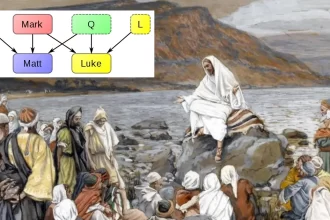
Regarding the ancient written sources, this refers in particular to the so-called Q source, a rather extensive collection of sayings of the Nazarene used by Matthew and Luke but not by Mark, the M source – material used exclusively by Matthew – and the L source, exclusive to Luke (which includes, for instance, the parable of the Good Samaritan, Mary’s visit to Elizabeth, etc.).
And then there’s the independent source used by John. Contrary to what was long assumed, “John’s independence from the Synoptics is taken for granted and sometimes he is more historically reliable” than the other three Gospels, writes J.P. Meier6J.P. Meier, A Marginal Jew, Vol. 2, Queriniana 2003, p. 900.
“Within just over a generation after Jesus’ death,” the renowned American biblical scholar comments, “all the most important facts and teachings from his life had been committed to writing”7J.P. Meier, A Marginal Jew, Vol. 2, Queriniana 2003, p. 677.
Stay updated by subscribing to our new channels:


The oral tradition about Jesus before the Gospels
Let us now focus on the oral tradition concerning Jesus.
Though it may seem, at first glance, like an unreliable method of preserving memory, in reality, it was the most common and widespread way to transmit history at the time. The Jews of the period already practiced the art of memory, learning long prayers and sacred texts, such as the Shema, from childhood.
Linguists and oral tradition scholars like Birger Gerhardsson (Lund University) and Kenneth Bailey (Princeton University) have studied this phenomenon8B. Gerhardsson, The Reliability of the Gospel Tradition, Peabody 2001 9K. Bailey, Jesus Through Middle Eastern Eyes, InterVarsity Press 2008, drawing parallels with rabbinic models and modern oral cultures.
The oral transmission of Jesus’ story could occur in tightly controlled environments – with strict mnemonic training – as well as in informal settings, such as community gatherings, where the core narrative remained solid while allowing for dynamic details.
Culturally, memorisation was habitual, and transmission was faithful. During this period, Jesus’ words and actions were strengthened into a “shared heritage” that would later take form in the Gospels about 40 years after his death.
The eyewitnesses of the “Jesus event” gathered with others, spreading his life, deeds, and miracles. These stories were repeated and retold from memory for several years, solidifying a clear narrative structure within the early communities.
Jesus himself frequently emphasized the importance of remembering and orally transmitting his words, as seen in many instances:
“Let these words sink into your ears” (Luke 9:44);
“Everyone who hears these words of mine and acts on them…” (Matt. 7:24);
“Go therefore and make disciples of all nations, baptising them in the name of the Father and of the Son and of the Holy Spirit, teaching them to observe all that I have commanded you” (Matt. 28:19–20);
“Heaven and earth will pass away, but my words will not pass away” (Mark 13:31)
“If you abide in me, and my words abide in you” (John 15:7).
It has also been suggested10M. Licona, Are the Gospels “Historically Reliable”? A Focused Comparison of Suetonius’s Life of Augustus and the Gospel of Mark, Religions 2019 that, unlike today’s priests who compose new homilies every day or week, Jesus may have repeated a dozen core sermons countless times, often using easily memorable parables.
His disciples thus heard the same ideas many times over, which – although radically new – became embedded in memory and were taught for decades after the Master’s death.
Objection to Oral Tradition: Unreliable
It was by no means a matter of creatively inventing narratives, nor of mere mechanical repetition. As the renowned scholar James Dunn (University of Durham) explains, there was in fact active control over the content by key figures based in Jerusalem and in close contact with one another, ensuring fidelity to the actual events.
Paul himself, moreover, speaks of information that was “received” and “passed on” (using the Greek word paradosis) in his writings.
The objection that oral traditions could have developed freely and independently, shaped from time to time to meet local or theological needs, has been challenged by scholars such as Richard Bauckham11Jesus and the Eyewitnesses: The Gospels as Eyewitness Testimony, Grand Rapids 2017 and the aforementioned James Dunn12The Oral Gospel Tradition, Wm. B. Eerdmans Publishing Company 2013.
And telling the same story repeatedly from the moment of the event tends to refine rather than diminish memory. As Bauckham writes: “Frequent recall is a major factor in both preserving memory and preserving it accurately.”13R. Bauckham, Jesus and the Eyewitnesses: The Gospels as Eyewitness Testimony, Grand Rapids 2017.
Group memory, that is, a shared narrative, also helps to maintain the stability of core storylines, even if certain nuances may naturally shift.
The Power of Evocative Memory
In addition to the above, recent evidence from sociology and psychology has shed light on what is known as evocative memory.
Cognitive studies on memory reliability show that significant events, especially those that are emotionally intense or experienced in community, tend to be preserved in memory over the long term.
A classic example is that everyone reading this article remembers clearly what they were doing when they first heard about the terrorist attack on the World Trade Center on September 11, 2001.
Even though more than 20 years have passed (roughly the span between Jesus’ death and Paul’s first writings), and even though we were not present as eyewitnesses—and thus less emotionally invested—we can still recall exactly what happened around us that day.
This must have happened to the disciples, who spent one or two years living day and night with the Master, witnessing an extraordinary life that overwhelmed them so deeply that they left their families to follow him.
This is evident from the fact that the Gospel texts are often brief on major events but include precise and seemingly irrelevant details, such as the Fourth Evangelist’s note about the time of day when Andrew and John first met Jesus: “It was about four in the afternoon.” (Jn 1:39).
Here is how the biblical scholar Richard Bauckham explains this:
“Eyewitnesses remembered events from the life of Jesus that were inherently memorable: unusual episodes that imprinted themselves on the memory, of great importance to those who experienced them, often true turning points that changed their lives. They did not need to recall peripheral details of the scene or the event—which psychology tells us are less reliable in evocative memory and which, indeed, the Gospels rarely report—but rather the central elements, those that carried deep meaning for the witnesses and were faithfully passed down. We can therefore conclude that the eyewitness memories of the story of Jesus highly satisfy the reliability criteria established by the psychological study of evocative memory.”14R. Bauckham, Jesus and the Eyewitnesses: The Gospels as Eyewitness Testimony, Grand Rapids 2017.
Thus, the early Christian narrative emerged from a combination of evocative memory, a communal framework, formalized oral tradition and, in parallel, sayings and written texts even before Jesus’ death.
It was a conscientious tradition, with deliberate mechanisms of oral and written transmission subject to verification by the Jerusalem community.
Author







0 commenti a The Oral and Written Tradition on Jesus Before the Gospels