
Shroud: The Bas-Relief Hypothesis Definitively Debunked
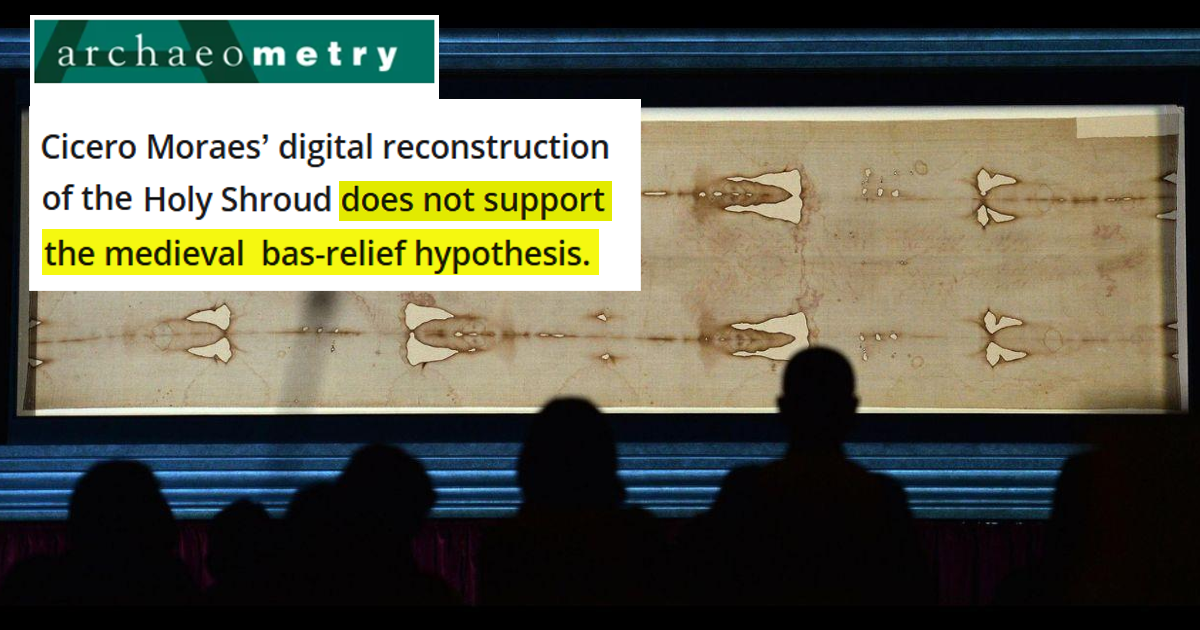
The journal “Archaeometry” has published a detailed and definitive response to the research of Cicero Moraes regarding the hypothesis of a bas-relief being at the origin of the Shroud.

by
Alessandro Piana*
*Scholar and international specialist on the Shroud
All those who follow this blog will well remember the media attention surrounding the Shroud that emerged last summer.
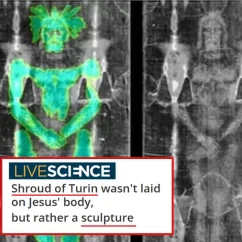
The occasion was the article published in the journal Archaeometry by Brazilian designer Cicero Moraes, whose first critical review at the global level appeared on this very site, written by the author of these notes.
In the interest of academic debate, together with Emanuela Marinelli and Tristan Casabianca—two researchers well known to those who follow the events surrounding the Turin Shroud—we decided to prepare a commentary supported by a solid body of bibliographic references, which has recently been published in the same journal.
Stay updated by subscribing to our new channels:


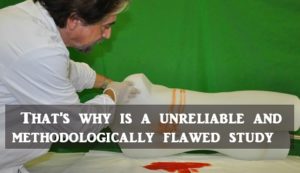
Shroud and bas-relief: a flawed study
The paper assesses whether the claims made by the Brazilian researcher are actually supported by the established evidence regarding the Shroud.
Moraes’ partial digital reconstruction of the Turin Shroud does not support the bas-relief hypothesis, whether of medieval origin or otherwise.
In our view, this study—based on ambiguous objectives, methodological flaws, fallacious reasoning, and the omission of essential features of the artifact—fails to advance research into understanding the image formation process.
First of all, as already highlighted at the time, the ambiguity of the study’s objective becomes apparent.
What is presented as a “strictly methodological” approach actually falls short in many respects: approximations regarding anatomical accuracy, the inversion of the actual position of the hands and feet, and the omission of the dorsal image are only the most significant issues.
Not to mention other aspects such as the presence of blood, the extreme superficiality of the image, and the absence of any image beneath the bloodstains.
All characteristics that even the most recent findings have shown to be the main difficulty in attempting to reproduce all the features of the cloth, even with the most advanced technological tools available.
The questionable choices of Cicero Moraes
Secondly, we have already discussed the questionable choice to rely solely on features derived from Giuseppe Enrie’s photograph (taken in 1931), rather than using more recent ones (such as those by Giandurante in 2002).
As well as the decision to run the simulation using the parameters of a “generic cotton” instead of linen, and completely omitting the existence of a supporting surface for the body, which appears to be floating in the air.
Not to mention the arbitrary choice to reduce the bas-relief used to one quarter of its original size.
Methodological flaws and omissions
A number of observations also concern the radiocarbon test results, which, according to Moraes, “converged significantly.”
In reality, statistical analyses carried out in recent years (HERE and HERE) show a significant heterogeneity in the 1988 results, which consequently calls into question the reliability of the procedure used to determine the age of the Shroud.
Likewise, some recently published research on alternative methods of dating textiles is completely omitted.
There is also no shortage of remarks regarding the selection of bibliographic references more aligned with the hypothesis of a medieval origin of the Shroud, omitting some interesting lines of research that have emerged in recent years, as well as the choice not to consider certain hypotheses regarding the mechanism of image formation.
In conclusion, in the opinion of the author, Moraes’ work merely demonstrates how approaches characterized by preconceptions and methodological bias are often the most appreciated by a certain type of mass media, especially when dealing with the Shroud.
Follow the author’s blog: SINDONE insights
Author







0 commenti a Shroud: The Bas-Relief Hypothesis Definitively Debunked