
Leo XIV between genocide, Fiducia Supplicans and the Mass in Latin

Reconstruction of the main themes touched on by the Pope in his first interview. Leo XIV ranges from Fiducia Supplicans to the Mass in Latin, from Gaza to women’s ordination. Here is the summary.
The first long interview as Pontiff of Leo XIV was released just a few hours ago.
We are not very fond of these communicative forms introduced by Pope Francis, considering the high risk of misinterpretations that an interview can generate compared to a more formal address.
In any case, in the volume “León XIV: ciudadano del mundo, misionero del siglo XXI” (Penguin Perú 2025) edited by Elisa Ann Allen, the Pope touches on various topics ranging from the tragedy in Gaza to international politics, up to the internal challenges of the Church.
On these, in particular, Leo XIV deals with Fiducia Supplicans and the Mass in Latin, as well as deaconesses and women’s ordination.
The impression is the image of a Pope who, while aware of the expectations inside and outside the Church, chooses the language of prudence and responsibility, avoiding simplifications and slogans.
Below are the words he expressed on the main topics addressed.
Gaza and the question of genocide
Leone XIV expresses deep concern for the suffering of the population in Gaza, especially for children: hunger, need for healthcare and humanitarian aid. He believes the situation is becoming unsustainable if action is not taken.
On the use of the term “genocide” he points out instead that although the word is increasingly used even in international circles, the Holy See «does not believe» at the moment that «it is possible to issue any official statement» because the technical definition is currently debated among experts.
This does not mean moral silence, but prudence in the use of words.
United States, China, migrants
Referring to the United States, he stressed that although being American, he does not intend to «get involved in partisan politics» and has left it to the Church leadership in the United States to engage with President Donald Trump.
However, he does not fear addressing urgent issues with authorities when necessary, for example human dignity and the issue of migrants. After inviting a return to the Letter sent by Pope Francis, congratulating the bishops who are applying it, he emphasizes the need for state policies to reflect the principle of respect for the dignity of all people, regardless of where they are born.
On relations with China, Leone XIV wanted to distinguish himself for continuity: the Holy See’s policy will be that «followed for some years», without claiming to «be wiser or more experienced» than his predecessors. He is fully aware that many Chinese Catholics «have lived some kind of oppression or difficulty in living their faith freely, and without choosing sides».
LGBTQ+ identity
On the LGBTQ+ issue, Leone XIV adopts Francis’s formula of universal welcome: “todos, todos, todos”.
While stating that «everyone’s invited in», he also clarified that «I don’t invite a person in because they are or are not any specific identity» but because «they are a son or daughter of God». And sexual identity should not be «a primary issue» in the relationship.
«What they call the traditional family», the Pope also affirms, «need to be supported». The family is «father, mother, and children», whose social role «has to be recognized, strengthened».
Therefore, Leone XIV adds, «I find it highly unlikely, certainly in the near future, that the Church’s doctrine will change in terms of what the church teaches about sexuality, what the Church teaches about marriage», recalling that he has already spoken out like his predecessor in favor of «a family composed of a man and a woman», «blessed in the sacrament of marriage».
Leo XIV on Fiducia Supplicans and the Mass in Latin
The Pope also speaks about “Fiducia Supplicans“, recalling that in Northern Europe they are already publishing «rituals of blessing ‘people who love one another’» but «which goes specifically against that Pope Francis approved». This document, he clarifies, «basically says, of course we can bless all people, but it doesn’t look for a way of ritualizing some kind of blessing because that’s not what the Church teaches».
This does not mean excluding people or labeling them as bad, «but I think it’s very important, again, to accept people who make choices in their life and to respect them». And again: «The individuals will be accepted and received».
Part of the interview is devoted to the issue of the Tridentine Mass which he describes as «burning», because some have used the liturgy as a «political instrument».
A «very deplorable» thing and for this he announces the possibility of «sitting at a table with a group of people who support the Tridentine rite», in order to address the issue «with synodality».
Leone XIV nevertheless recognizes that «the “abuse” of the liturgy by what we call the Vatican II Mass has not helped those seeking a deeper prayer experience, a contact with the mystery of faith that seemed to be found in the celebration of the Tridentine Mass».
He stresses that if the novus ordo were celebrated «appropriately» there would not be «so much difference between this experience and that one», that is, with the Tridentine Mass.
What wounds the Pope is the polarization of positions, so much so that he reports accounts of some bishops who tried to involve traditionalist figures who, however, «do not even want to talk about it. This is a problem in itself. It means that now we are in ideology, we are no longer in the experience of ecclesial communion. This is one of the items on the agenda».
Leone XIV on deaconesses and women’s ordination
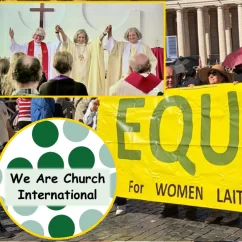
As for the role of women in the Church, the Pope is ready to «continue in the footsteps of Francis including in appointing women to some leadership roles at different levels in the Church’s life», while maintaining the traditional teaching on the question of women deacons and women’s ordination: «I at the moment don’t have an intention of changing the teaching of the Church on the topic».
He will nevertheless continue within the Dicastery for the Doctrine of the Faith «examine the theological background, history, of some of those questions, and we’ll walk with that and see what comes».
On sexual abuse
The Pontiff also addressed the sexual abuse crisis, calling it a «not yet resolved» issue, asking for «great respect» for the victims.
He added that «over 90% of cases people who come forward with abuse allegations are telling the truth», while noting that there are «proven cases of some false accusations» that have «destroyed the lives» of priests. And in any case, an accusation «does not take away the presumption of innocence».
Alongside the defense of the victim and their protection, he therefore asks to also consider the protection and rights of the accused even if «saying so sometimes causes greater pain for the victims».
In any case, Leone XIV shifts the focus to the «vast majority of people who are committed to the church, priests, and bishops, religious», who «have never abused anyone. So, we can’t make the whole church focus exclusively on this issue».
Other religions
Leone XIV explains the initiatives planned to continue the ecumenical path, particularly related to the 1700th anniversary of the Council of Nicaea.
He talks about the relationship with Islam which «is not one reality either, so you can meet with one group, and you have other groups», that with Buddhism and with the Jewish community, which he sees «improved a bit in the first couple of months» of his pontificate.
Very significant is what the Pope says about asserting Christian identity first in order to open up to other religious experiences:
«I’m not afraid to say I believe in Jesus Christ and that he died on the cross and rose from the dead, and that we together are called to share that message. To say that doesn’t mean that I’m going to disrespect, r offend or set a crusade against people of other religions, because that’s just not the answer, we’ve learned that through history».
Author





0 commenti a Leo XIV between genocide, Fiducia Supplicans and the Mass in Latin