
The Myth of the Renaissance, Born to Distort the Middle Ages

Historian Ada Palmer explains the myth of the Renaissance contrasted with the “Dark Ages” of the Middle Ages. An Enlightenment invention to distort history.
The Renaissance is a modern myth.
We speak of it as a luminous era, a glorious rebirth of reason in contrast with the dark and superstitious medieval age.
However, this is an interpretation constructed retrospectively, especially between the eighteenth and nineteenth centuries, to project Enlightenment ideals onto the past.
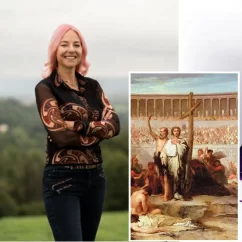
Ada Palmer, professor of Modern European History at the University of Chicago and author of “Reading Lucretius in the Renaissance” (Harvard University Press 2014) and the more recent “Inventing the Renaissance: Myths of a Golden Age” (University of Chicago Press 2025), has dismantled this simplified view in a long intervention on YouTube, offering a more precise and fascinating analysis.
The arbitrarily elastic boundaries of the Renaissance
The scholar explains that her first book was the result of ten years of work to respond to her colleague and friend Stephen Greenblatt and his The Swerve: How the World Became Modern (W. W. Norton & Company 2012).
Greenblatt’s thesis? That after a terrible and dark period called the “Dark Ages”, full of flagellant monks, Lucretius’s book “De rerum natura” arrived, everyone read it, and it finally opened the way to modernity.
But where does the idea come from that there was an age of rebirth and that, conversely, there was a dark era?
It is a very satisfying narrative because “we like golden ages and dark ages”, explains the historian, and in doing so one identifies some factor that made us modern unlike medieval people. Some say from Machiavelli onward, others from Petrarch, others from the birth of capitalism, others from the Hundred Years’ War or Giotto’s death.
The first obstacle, however, Palmer explains, is that every book on the Renaissance has a different opinion on which factor marked the transition from darkness to modernity.
If the eminent Jacques Le Goff explained at length that the Renaissance never existed but was a very long Middle Ages, Palmer confirms that the temporal boundaries of the Renaissance are elastic and everyone anticipates or extends it as they please.
Thus we ended up believing that the Renaissance is when we think the beautiful things began that make us different from the past. “And since it is elastic, it is also subjective, changeable and incoherent”.
How the term “Dark Ages” for the Middle Ages was born
The term “Dark Ages” was first coined in the nineteenth century to indicate that there were few written sources for that period, “that is how historians really began to use this term”, explains the American historian.
There were many textual sources from antiquity and subsequent eras, but few in between. For very practical reasons: medieval Europe lost access to papyrus because the seas were infested with pirates and it could no longer be imported safely from Egypt. People therefore wrote on expensive sheepskin and, consequently, book production was much more limited.
Modern historians, on the other hand, have developed other techniques for writing history, using non-textual sources and no longer consider the Middle Ages “dark” in the sense of poorly documented. Medieval historians of the time, Palmer explains, if they had our technologies would have considered it a luminous period.
On the other hand, in the fifteenth century there was no idea that one was living in an age of rebirth or a sharp break with the medieval past.
The rush to recover the forgotten writings of the classical world, adds the scholar, “was not driven by a secular spirit, but by a deep religious sense: the idea that God had scattered truth throughout the world and that it was man’s duty to seek it everywhere, even among the pagans. It is in this context that the so-called ‘return to Lucretius‘ takes place”.
How “Renaissance propaganda” affected art
There is another aspect highlighted by Palmer: there is a great distorting difference between how impressive and “gilded” an era appears from the remains it left us.
In fact, “Renaissance propaganda managed to make the art and culture of a very specific period in Italy celebrated as beautiful and as symbols of culture, so the works of that period were preserved disproportionately compared to medieval ones, which were repainted, left to rot and destroyed”.
This is another reason why we have a lot of Renaissance art and little medieval art: much was lost, not preserved and “our idea of beauty is actually strongly shaped by the Renaissance”.
In particular, Palmer explains, in the Anglo-Saxon world, “there has been an enormous propaganda apparatus over the last 200 years aimed at making us despise everything Spanish. This has meant that we loved the Renaissance, found it beautiful and tasteful, because it became a language of artistic power with which we communicate positive messages. And we use the art of decadence and primitivism — that medieval art — to communicate negativity”.
The Inquisition and the trials of Bruno and Galileo
The second part of the interview with the American historian concerns the Inquisition which, to the great surprise of many, is a Renaissance phenomenon and certainly not medieval.
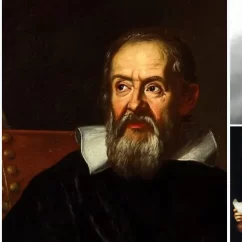
Palmer cites two famous cases, those of Giordano Bruno and Galileo Galilei and explains clearly why they cannot be taken as models of inquisitorial behavior. We have already discussed this replicating an article that “Il Foglio” dedicated to us a few days ago.
“It is like taking two panels from a comic book,” explains the historian, “enlarging them and hanging them on the wall as portraits, without knowing the rest of the narrative that surrounds them, that is the wider context in which those events occurred”.
The scholar announces that her next book will be dedicated precisely to the Inquisition because, once again, she discovered how false the legend is. “If you scroll through the records of the Inquisition — we are talking about hundreds of thousands of cases — of the Roman Inquisition, you will find 12 trials aimed at scientists. And they are all in the same decade”. Moreover, “all acquitted or given simple fines”.
It was not typical Inquisition practice to investigate scientists and “those trials did not represent the usual activity of the Inquisition”. In inquisitorial trials, in fact, one notices sudden peaks on certain topics that then disappear, “because at certain moments a particular topic is used as a scapegoat, what people fear most at that precise moment”.
This is also evident from the trials for Judaizing of the Sicilian Inquisition, that is the (alleged) false conversions to Christianity of the Jews: they went from 1000 to 8 in ten years because it was the “case of the moment”, exactly as happens today.
Who does not remember, for example, the social panic over TikTok in 2020, when brainwashing by China was feared, or the global anxiety over the “Blue Whale” challenges (2016) and youth suicide. Today no one talks about them anymore.
So, concludes Ada Palmer, “if you discover that all the trials against scientists are in the same decade, you have not discovered what the Inquisition did. You have discovered what the Inquisition did between 1590 and 1600 because there was something that at that moment pushed it to act that way”.
What is the message to take home from the long intervention of the American historian?
The Renaissance was not a “rebirth” in the modern sense and it was not the comforting fable of linear progress.
It was rather a troubled era, certainly fascinating but instrumentalized by moderns as a distorted mirror to project their own illusions.
Author




0 commenti a The Myth of the Renaissance, Born to Distort the Middle Ages