
Care for Creation: Its Roots in Medieval Monasticism
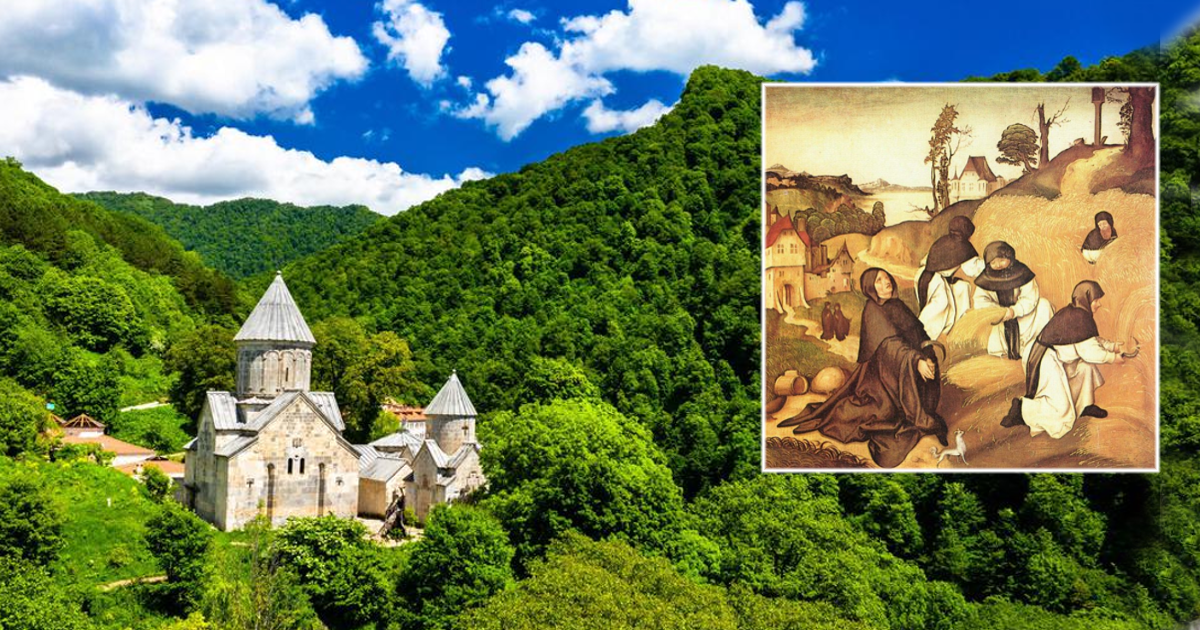
Medieval monasticism and the care for creation as a gift from God. We discuss the topic with Francesco Salvestrini, a medieval historian based in Florence.
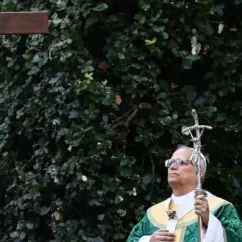
On July 9, Pope Leo XIV celebrated a Mass dedicated to the care for creation.
The initiative made some people raise an eyebrow, with critics describing it as “environmentalist ideology” or even an “ecologist Mass”.
In his off-the-cuff homily, the Holy Father called on the faithful: “We must pray for the conversion of many people, both inside and outside the Church, who still do not recognise the urgency of caring for our common home.”
But is the Church’s and the Pope’s call for the stewardship and care for creation really the product of an environmentalist ideology — more pagan than Christian?
When Pope Francis in Laudato Si’ urged us to “live out our vocation to be protectors of God’s handiwork”, and when Leo called for “new and effective ways to safeguard the nature entrusted to us”, were they giving in to modernist thinking?
In fact, this concern for the care of creation as a gift from God has deep roots within the Church, long before anyone was even thinking about it.
In Christian medieval times, monks “were already balancing colonisation with respect for the environment, viewing the forest and other uncultivated areas as integral parts of their spiritual garden”1F. Salvestrini, The Monastic Garden, in P. Caraffi and P. Pirillo, “«Prati, verzieri e pomieri». The Medieval Garden. Cultures, Ideals, Societies, Edifir 2017, p. 117.
Care for Creation: An Interview with a Medieval Historian
We discussed all this with Francesco Salvestrini, full professor of Medieval History at the University of Florence and a leading expert on medieval monasticism. We put a few questions to him.
QUESTION – Professor, your research shows that medieval monasteries had a deep and respectful relationship with the natural world. Was this solely driven by the need to extract resources, or was there a deeper awareness of creation’s value?
ANSWER – That’s a complex question.
Benedictine monks had a profound respect for Creation because it was the work of God. But they also firmly believed that nature had been created to serve mankind, God’s favoured and privileged creature. Man was expected to use natural resources respectfully.
Plants and animals often served as examples or metaphors of moral qualities (or even of vices and sin) which the monk was expected to observe and learn from.
Still, it’s true that the major monasteries didn’t hesitate to alter the environment for economic and productive purposes, since Nature was not considered “good” in itself (forests were often believed to be inhabited by demons) — it only became so after contemplatives brought in their expressions of “civilisation”.
The Monks and Care for Creation: Not an “Integral Ecology”
QUESTION – So the idea of caring for creation wasn’t seen as a value in and of itself? Some sort of proto-“integral ecology” that some even ascribe to Saint Francis of Assisi?
ANSWER – We cannot speak of ecological awareness among monks (nor among the friars minor, for that matter). Nature held no value in itself, but only as an expression of divine love.
To speak of integral ecology in relation to monasticism is meaningless. Monks, especially Benedictines, consistently altered the landscapes where they settled, because working the land was a central expression of their consecrated way of life.
QUESTION – Some fear the urgency expressed by Pope Francis and Pope Leo XIV regarding the care for creation is simply a trend or submission to environmentalist ideology. Can a rediscovery of monastic ecology help restore a balanced view of nature?
ANSWER – No doubt, the legitimate and necessary positions taken today by the Church’s top representatives regarding environmental protection are influenced by the appeal of ecological movements. That said, I also believe it is right for the Supreme Pontiffs to speak to modern audiences using modern language.
Monasticism, however, never meant that wild nature should be left untouched, since man could not live in a wild nature. As Bernard of Clairvaux said, nature was a book to be read — a reality to be lived and engaged with in accordance with the laws God set for man’s good.
The Monastic Balance: Care and Use of Nature
QUESTION – When Leo XIV calls on us to “live in harmony with creation, which is healing and reconciliation for us,” do you see that as a modern idea or something present in medieval texts?
ANSWER – Creation’s harmony is a source of consolation and reconciliation for humankind. Monks, as well as Francis of Assisi, found in nature the very essence of life — and in immersing themselves in it, they felt closer to God.
But this immersion in nature was not passive contemplation; it was a call to action, to engage with creation, to sanctify through work the sacred space (understood as sacer, even in its negative sense) of deserts and forests.
Nature existed for man, and man had to manage it just as he would his own home or estate (redde rationem villicationis tuae).
QUESTION – In one of your works, you mention the “spiritual garden” the monks saw in the forest. Can you explain that idea?
ANSWER – The forest was in some sense a spiritual garden, although it held more importance for hermit movements (for whom it was a sanctuary) than for cenobitic orders, which often settled near urban areas.
Monks were not always just land-clearers (not even the Cistercians). Forests and meadows could also acquire productive importance and needed to be cared for just like fields, orchards, pastures, or gardens. The monastic garden was a product of domesticated nature, not wild nature.
Only after human intervention did nature take on the qualities of sacred space (that is, space institutionally dedicated to the good). The work of the founding fathers — from Benedict to Romuald of Ravenna, from Robert of Molesme to Saint Bernard — makes this clear.
QUESTION – If you had to summarise one key message that medieval monasteries offer us today about the human-environment relationship, what would it be?
ANSWER – The environment is God’s Creation, made so that it might support human life. Living in harmony with the environment means living more peacefully with oneself and drawing closer to God.
The Almighty “speaks” to humanity through nature, and we must learn to read the great pages of the book of the world to rediscover true harmony between the ecosystem and our inner selves. Yet the environment can also be harsh and dangerous, and humanity has both the right and the duty to manage and “tame” it — and in doing so, to find meaning in earthly life.
Read all our other “Friday Interviews”.
Author








0 commenti a Care for Creation: Its Roots in Medieval Monasticism