
Gospel of John and the Fourth Quest for the Historical Jesus

Review of the latest book by biblical scholar Craig Blomberg on the Gospel of John and its historical reliability, advocating for its central role in academic discussions during a new phase of research on the historical Jesus.
The latest book by the eminent scholar Craig Blomberg, Emeritus Professor of New Testament at Denver Seminary in Colorado, is highly engaging.
We would like to share his conclusions here and provide a review of the work.
This monumental book by one of the finest evangelical scholars is titled Jesus the Purifier: John’s Gospel and the Fourth Quest for the Historical Jesus (Baker Academic 2023). It provides a comprehensive and updated overview of historical Jesus research.
After an initial section analyzing the three phases of research on the historical Jesus, the author underscores the need to focus academic attention on the Gospel of John, now recognized by the scholarly community as an independent source and, in some cases, even more reliable on specific details than the other three gospels.
The Three Phases of Historical Jesus Research
In the first part of the book, Blomberg reviews various methodological approaches to the historical reconstruction of Jesus of Nazareth.
The so-called “first quest” for the historical Jesus began in the late 19th century within the framework of Enlightenment rationalism.
Scholars like Albert Schweitzer focused on “demythologizing” Jesus, reducing miracles and supernatural events to natural or symbolic explanations. The primary aim was to render Jesus acceptable to rationalist perspectives, portraying him as a great moral teacher and social reformer while dismissing miracles and his divine nature as superstitious myths.
In the 20th century, the “second quest” emerged, characterized by a return to theological inquiry.
Scholars like Rudolf Bultmann emphasized faith and the kerygmatic interpretation of the Christ of faith rather than the historical Jesus, asserting that it was impossible to truly uncover the historical Jesus without the mediation of Christian faith.
During this phase, New Testament texts were erroneously presented as mere documents of faith rather than historical sources.
From the 1980s and 1990s onward, the “third quest” for the historical Jesus gained traction, led by scholars such as N.T. Wright, John P. Meier, E.P. Sanders, James Dunn, Dale Allison, Günther Bornkamm, Joachim Jeremias, and Ernst Käsemann, a student of Bultmann who seriously challenged his teachings (now largely discredited).
Using modern historical methods, this phase witnessed a reconciliation of the historical Jesus with Christian tradition, avoiding a priori exclusion of either the historical or theological dimensions. Jesus is understood as a historical figure rooted in first-century Judaism and, simultaneously, as the originator of Christian faith.
This approach treats the entirety of the gospels not only as documents of faith but also as valid historical sources, subjected to rigorous historical and literary analyses.
In his book, Blomberg evaluates the strengths and weaknesses of the various phases of historical inquiry, referencing and commenting on the theses of many key figures.
The author highlights that many scholars remain heavily influenced by a naturalistic and Enlightenment worldview, typical of the first quest. As a result, miracle accounts and any references to the supernatural are often prejudicially dismissed, ignored, or poorly interpreted in naturalistic terms.
The Jesus Seminar (1985)
Chapter 4 of the book is dedicated to the Jesus Seminar, a group virtually unknown to the broader Italian public.
The Jesus Seminar was an academic research project founded in 1985 by Robert W. Funk, John Dominic Crossan, and Marcus Borg, along with a group of approximately 50 biblical scholars and theologians. Its aim was to examine the sayings and deeds attributed to Jesus of Nazareth in the Gospels to determine which were authentic and which were likely added later by early Christian communities.
The members of the Jesus Seminar were mostly secular, meaning they did not adhere to the divine inspiration or authority of the Bible. They placed significant emphasis on the apocryphal Gospel of Thomas, much like the Italian theologian Vito Mancuso does today.
The method used to determine what Jesus of Nazareth actually said was also highly controversial. As expected, the resulting portrayal of Jesus was stripped of supernatural assumptions.
The Gospel of John at the Heart of the Fourth Quest
The most compelling part of Blomberg’s new work is his analysis of the Third Quest for the Historical Jesus.
According to many scholars (Scot McKnight, Luke Timothy Johnson, and others), the third phase may have reached a dead end.
At this juncture (chapters 6–10), Craig Blomberg argues for the necessity of a Fourth Quest, which he believes has already begun. This new phase draws upon (or should draw upon) a source that has so far been widely overlooked, often deliberately: the Gospel of John.
Until a few decades ago, the academic community tended to dismiss the Fourth Evangelist, considering his writing to be later than the Synoptics and overly theological.
However, in recent years, an increasing number of researchers have been reassessing it as a valuable source for studying the historical Jesus.
The majority of scholars believe that the Johannine tradition originates from one of Jesus’ disciples, although there is no consensus on the identity of this disciple.
For instance, theologian Michael Bird acknowledges that the Fourth Gospel has a unique structure, distinct from the Synoptics, and suggests that the disciple serving as its source founded a church or group of churches in the vicinity of Ephesus1Bird M., Evans C.A., Gathercole S., How God Became Jesus. The Real Origins of Belief in Jesus’ Divine Nature. A Response to Bart D. Ehrman, Zondervan 2014, p. 72.
The Historical Reliability of the Gospel of John
Today, it is generally regarded as an independent source from the other evangelists. Despite its numerous narratives rich in theological symbolism, in many cases, John has proven to be more historically reliable than Mark, Matthew, and Luke.
This has been demonstrated most notably by the eminent American biblical scholar J.P. Meier, who analyzed all passages where John preserves a more primitive form compared to the Synoptics2Meier J.P., A Marginal Jew: Rethinking the Historical Jesus. Mentor, Message, and Miracles, vol. 2, Queriniana 2002, pp. 831–900.
The most notable cases include the older and more reliable material expressed by the fourth evangelist on John the Baptist3Meier J.P., A Marginal Jew: Rethinking the Historical Jesus. Mentor, Message, and Miracles, vol. 2, Queriniana 2002, pp. 19, 158, the dating of the Last Supper, the dating of Jesus’ death, and the account of Him walking on water4Meier J.P., A Marginal Jew: Rethinking the Historical Jesus. Mentor, Message, and Miracles, vol. 2, Queriniana 2002, pp. 1108, 1109.
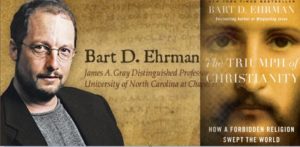
Even the agnostic scholar Bart D. Ehrman acknowledges:
“Some sources predating the Gospel of John originate from the early years of the Christian movement, as evidenced by their roots in Palestinian Aramaic-speaking contexts. This places them in the early days of the movement, several decades before the composition of the Gospel of Mark.”5Ehrman B.D., Did Jesus Exist? The Historical Argument for Jesus of Nazareth, HarperOne 2013, p. 265.
In earlier works, however, Ehrman denied its historical value6Ehrman B.D., Jesus: Apocalyptic Prophet of the New Millennium, Oxford University Press 1999, a stance that reflects the ambiguity of the American scholar, who alternately credits or discredits the reliability of the Gospels depending on his objectives.
The scholar from Princeton Theological Seminary, James H. Charlesworth, has also studied the fourth Gospel in detail and highlighted that many of its traditions are older and more consistent with known historical conditions. For instance, regarding the arrest and trial of Jesus, this independence and historical grounding confer credibility7Charlesworth J.H., Scrolls & Gospel in Culpepper R.A. and Black C.C., Exploring the Gospel of John: In Honor of D. Moody Smith, Westminster John Knox 1996, p. 66.
We fully agree with Blomberg that a new phase of historical Jesus studies (the “fourth quest”) is necessary, one that focuses on the fourth Gospel.
Finally, the evangelist John will receive the academic attention he deserves.









0 commenti a Gospel of John and the Fourth Quest for the Historical Jesus