
French Wars of Religion: Religion Had Nothing to Do with It
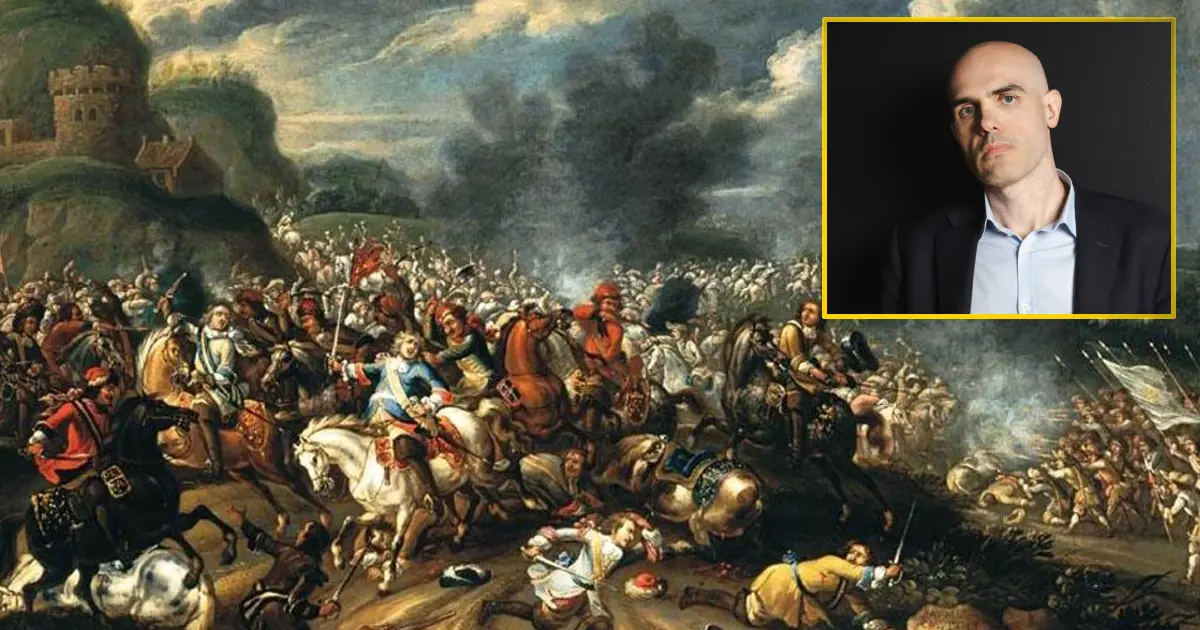
Italian geopolitical analyst speaks at the Festival of the Middle Ages 2025: in the French wars of religion, religion was not the cause. They were geopolitical conflicts.
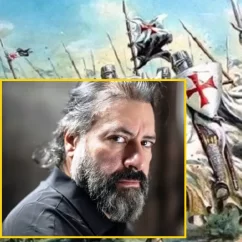
Dario Fabbri spoke about the “wars of religion” in France at the 2025 Festival of the Middle Ages.
A well-known italian geopolitical analyst, Fabbri is editor of the magazine Domino, which he founded together with Enrico Mentana.
In the first part of his speech he explained the concept of human geopolitics and its various applications, eventually arriving at the wars of religion. That is, the conflicts between Catholics and Protestants that bloodied Europe between the 16th and 17th centuries following the Reformation.
Fabbri’s talk, delivered with much irony, spanned centuries of history, criticizing the extreme oversimplification with which it is taught in schools because, he says, “we are the product of the Enlightenment society, which is the worst of the worst, but is portrayed as the highest, and which essentially destroyed our cultural framework”.
French Wars of Religion: religion was unrelated
Coming to the heart of his talk, Fabbri explains that the so-called “wars of religion” were not religious conflicts in the strict sense of the term, but rather episodes of power struggles, masked by religious motives.
This idea of religion as a cause of war has a pedigree that starts with Spinoza, then Hobbes and Locke, and was polemically expressed by Gibbon and Voltaire.
But it is a myth, and there are countless examples, including the list of various political and territorial interests of the factions involved in the wars of religion in France, where the very alliances were flexible and pragmatic, not at all based on religious beliefs.
Think of Catholic France allied with the German Protestant princes against the Catholic Charles V in 1552, without Catholic German princes lifting a finger. Even earlier, in 1525, France allied with the Muslim Turks against the Holy Roman Empire, witnessing one Catholic ruler fighting another Catholic with Islamic assistance.
According to Fabbri, this is very similar to today’s division between Sunnis and Shiites, based essentially on political and cultural divisions among different Arab factions. Again, religion is used as a tool to justify conflicts of power and identity.
The geopolitical analyst rightly recalls the Anglican schism, which is studied today as a religious event but was in fact an exclusively political issue.
“Henry VIII wanted to remarry, but Rome would not allow it,” explains Fabbri. “He therefore created a new church with himself at the top. Theologically, Anglicanism was practically identical to Catholicism. The difference was minimal and the motivation was geopolitical: England refused to be subordinated to Rome and decided to manage its own religious affairs independently.”
Catholics versus Huguenots? Surprising alliances
And what about the Huguenots? Again, “this dynamic repeats itself: the Huguenots were not fighting the Catholics for religious reasons but to survive in a hostile geopolitical context.”
And the idea of a conflict between the Catholic majority and the Huguenot minority over religious differences is false: nobles continually changed sides depending on the course of the war, which saw Catholics and Protestants cooperating to preserve noble rights in the face of the monarchy’s centralization of power.
At Agen in 1562, for example, Catholic peasants joined their Huguenot compatriots in rebelling against the Catholic baron François de Fumel, just as Catholic and Protestant commoners joined forces in Pont-en-Roians (1578), Roissas (1579), Vivarais (1580), and many other areas.
The Thirty Years’ War, religion was not the cause
Let’s talk about the Thirty Years’ War and the stereotypical image of one Christian denomination against another in the name of doctrinal differences.
Yet the nominally Catholic imperial army included several Protestant generals and soldiers, and the war was sustained by mercenary companies whose loyalty went to the highest bidder, regardless of confession.
Think of Ernst von Mansfeld, who first served the Spanish Catholics and then joined the Lutheran Frederick V, or of Gustavus Adolphus of Sweden, remembered as the champion of Protestants but considered by them an invader who massacred Lutheran peasants when they tried to drive out the Swedes in November 1632.
Cardinal Richelieu, prime minister of Louis XIII of France, allied precisely with Protestant Gustavus Adolphus in 1631, and the entire second half of the war was in fact a struggle between France and the German Empire, both Catholic.
The shifting of sides, the changing alliances, and the many examples of armies of different confessional backgrounds joining against a common enemy, and even kingdoms of the same faith turning against each other, show that the wars of the 16th and 17th centuries were driven by social, political, territorial, and economic factors.
They were nation-states fighting each other for supremacy, consolidating their authority and economic strength. In summary: the “Wars of Religion” were not religious wars.
Returning to Dario Fabbri’s lecture, he himself recalls that “the Albigensian Crusade, the birth of Anglicanism, and the American revolts show that, behind the apparent religious struggle, lie motivations of power, territory, and national identity. Studying history as a purely theological struggle risks obscuring the understanding of the real factors underlying conflicts.”
Religion was often the language of conflict, but not the triggering cause.
7% of wars had a confessional origin
It is a topic we addressed on UCCR some time ago, debunking the myth that religion was the cause of most wars.
In the monumental “Encyclopedia of Wars” by Charles Phillips and Alan Axelrod, it is documented that out of all 1763 wars humanity has fought, less than 7% had a religious cause, and these accounted for less than 2% of all war deaths.
Religion is clearly excluded as a cause in all more or less modern wars: the Napoleonic wars, the American Revolution, the world wars (where religious groups were massacred by various State atheisms), the conflicts in Korea and Vietnam, and of course today’s conflicts between Russia and Ukraine and Israel and Palestine.
It is the various secular ideologies invented by man—such as nationalism, patriotism, capitalism, Marxism, and liberalism—that are the true causes of war. This also debunks the illusion that the modern secular nation-state is the solution to wars, rather than their cause.
To speak of french wars of religion as theological conflicts is a shortsighted simplification, failing to take into account the complex political and social dynamics that characterized them.
There are wars of power and geopolitics that often disguise themselves as religious disputes. Recognizing this is essential to understanding history without falling into myths.
Author







0 commenti a French Wars of Religion: Religion Had Nothing to Do with It