
Contradictions in the Gospels, B.D. Ehrman reverses: irrelevant!
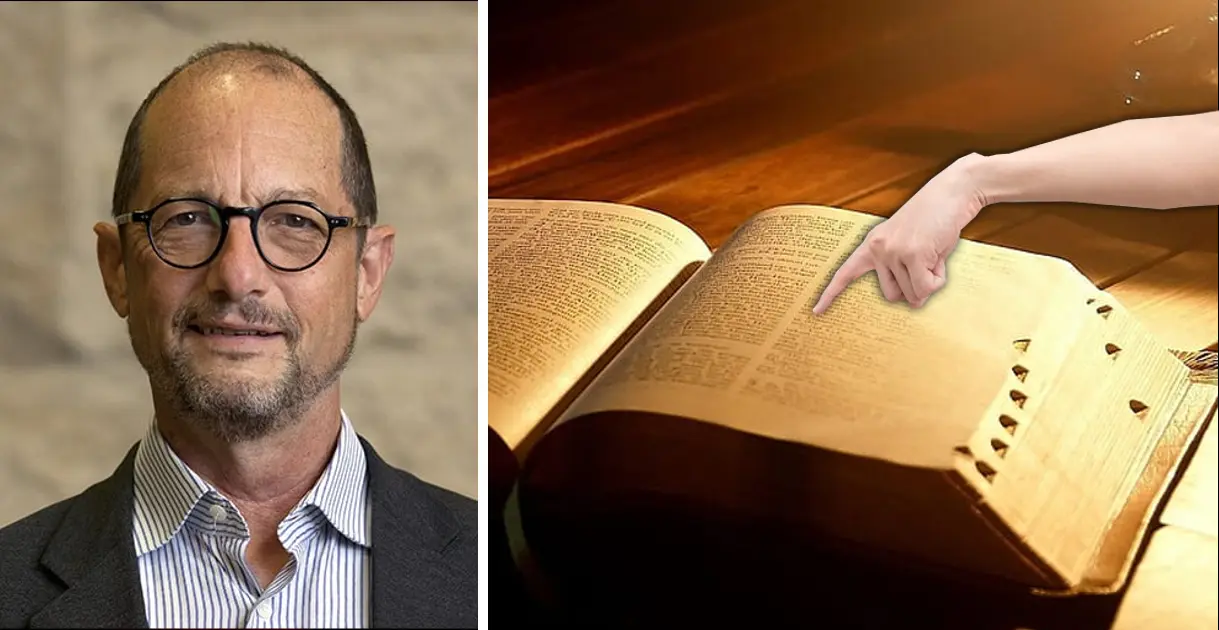
After 16 years, B.D. Ehrman changes his mind: the contradictions in the Gospels are discrepancies, they are few and not that important. Yet they were his trump card against the Gospels.
So, in the end, the contradictions in the Gospels are not that important.
It took 16 years to admit it, but finally even Bart D. Ehrman, a famous (skeptical) New Testament scholar and bestselling author, has reached the point where his numerous critics had been waiting for him for a long time.
B.D. Ehrman and the contradictions in the Gospels
It was 2009 when B.D. Ehrman (University of North Carolina) published “Jesus, Interrupted” (HarperCollins 2009), in which he revealed the differences between the evangelists, presenting them as central elements against the reliability of the Gospel narratives and sparking great debate in the academic and religious world.
As Michael Kruger (Reformed Theological Seminary) already commented at the time, Ehrman’s rather “conspiratorial” concern was that priests were keeping hidden from the public the results of modern historical criticism of the Bible, so that “Ehrman can present himself as a liberator”.
§
Obviously, contradictions in the Gospels have been discussed for centuries, long before Ehrman, but, Kruger ironically commented, “subtitles like ‘Uncovering the problems of the Bible that everyone already knows’ would have sold far fewer books”.
Michael Kruger’s scathing review had the merit of exposing B.D. Ehrman’s clickbait tendency, namely creating books and multimedia content with a huge ability to attract attention through catchy, purpose-built titles, subtitles, and images (precisely what 99% of serious scholars cannot do), but then “failing” in the content by presenting theses that were already known, discussed, and not very compromising.
The discrepancies can be harmonized
It is therefore significant that today, after so much time, the same skeptical scholar, in an episode of his podcast, admits that contradictions exist, but he greatly downplays their significance.
The talk begins according to Ehrman’s standard script: first he was an evangelical Christian and a bit gullible, then, by studying the texts, he “discovered the truth” and became agnostic (in other talks there are other variations, namely that he left the faith not because of his studies but because he was scandalized by the problem of evil).
Then finally comes the surprising part.
“It’s not that every verse is in contradiction — he explains — there are some, but you can’t say that the Gospels are ‘filled to the brim’ with inconsistencies”. Ehrman distinguishes in fact between “differences” and actual “contradictions,” emphasizing that many discrepancies can be explained or harmonized without difficulty.
Strange, because he himself at the time abhorred any harmonization between the evangelists, since that would “create one’s own version of the Gospel, different from both of those being read”1B.D. Ehrman, “Jesus, Interrupted”, HarperCollins 2009, p. 22.
Yet ancient historiography is notoriously limited in what it can record, and a writer could not say everything about a particular event. Therefore, when considering multiple historical sources, one obviously tries to combine them. It is inevitable for any historical account.
The historian’s task is precisely to reconstruct “what really happened” from the documents available, and B.D. Ehrman refused to do so only with the Gospel accounts.
Welcome, then, to the change in perspective.
“The contradictions in the Gospels are few”
Another interesting point concerns the usual examples of contradictions in the Gospels that he has been citing for decades.
For example, the number of women present at the tomb, the place of the appearance of the Risen One (Galilee in Matthew, Jerusalem in Luke), or the date of the crucifixion (Passover Eve in John, the day after the Passover meal in Mark). While, for him, these still remain real cases of contradiction, they are no longer considered the heart of the matter, nor an obstacle to reading and understanding the Gospel text.
“These differences are not a problem for faith, only for fundamentalism”, he says at one point in the video.
And yet, adds the man who made contradictions between the Gospels the pivot of unreliability, “I would say that there are not too many contradictions in what Jesus says, in the sense that it’s not that in one Gospel he says ‘love your enemies’ and in another he says ‘no, don’t love your enemies.’ It’s not like that; there really aren’t contradictions of that kind”.
If anything, the American scholar concludes, “certainly the texts report major differences and sometimes these differences, even when they are not contradictory, are really marked and important”.
The Gospel contradictions, a dangerous argument
But what is the problem with the differences between the evangelists?
It is precisely the proof that they are independent sources from one another, and these differences are normal in ancient texts, which were not written like modern legal transcripts.
Even today, on a daily basis, the same event is reported very differently by various newspapers. Yet no one doubts the reality of the event.
The example of scholar Michael R. Licona (Houston Christian University) is well known regarding the sinking of the Titanic and the contradictions among the survivors2M.R. Licona, in Ehrman–Licona Dialogue on the Historical Reliability of the New Testament, The Best Schools 2016.
Some reported seeing the ship break in two and others said it sank intact: it was the most terrible night of their lives, how could they have been mistaken on this detail?
Moreover, B.D. Ehrman has never realized how counterproductive it is to insist on contradictions in the Gospels as a sign of inauthenticity. Because the reverse is simply also true.
As explained by biblical scholar J.P. Meier (University of Notre Dame), Matthew and Luke did not know each other’s Gospel, but for most of the text, the account matches, and if one followed Ehrman’s scheme, one would consequently have to admit that every coincidence between the two becomes historically significant3J.P. Meier, A Marginal Jew: Rethinking the Historical Jesus, Vol. 1, Queriniana 2001, p. 207.
And finally, the presence of alterations in the Gospel text (which still needs to be proven) is nonetheless infinitely smaller than those committed by the historians considered the most reliable of the time, such as Plutarch and Suetonius.
At the end of the video, B.D. Ehrman distances himself from the accusation of trying to “destroy the Bible”.
That’s false, he says, “I learned these things at Princeton Theological Seminary when I was a Christian. Most of my professors were ordained ministers and they all saw these things and recognized them: their conclusion was not that Christianity was a problem”.
Once again, then, the skeptical scholar fortunately demonstrates a very different outlook from the more polemical and problematic one that had animated his famous book sixteen years ago.
Author










0 commenti a Contradictions in the Gospels, B.D. Ehrman reverses: irrelevant!