
Those young Catholics, a source of hope even for secular society
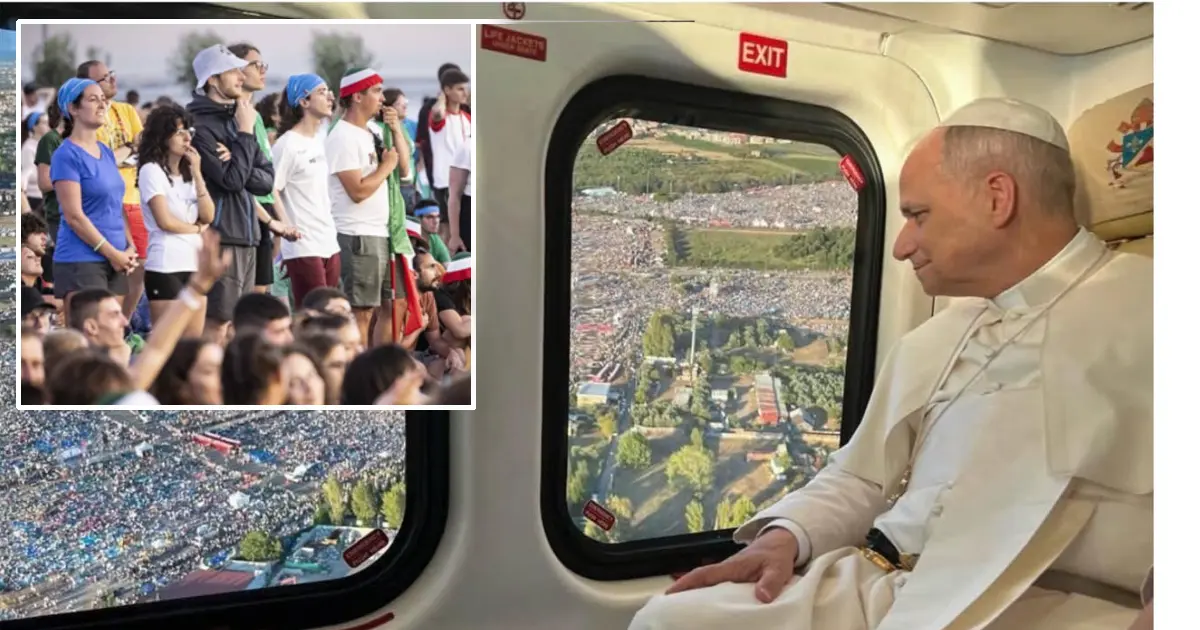
A commentary by sociologist Franco Garelli on the Jubilee of Youth. A reflection on how secular observers viewed those clean-cut faces filled with hope, and the possibility of a world finally moving in a different direction.
by Franco Garelli*
*Professor of Sociology of Religion at the University of Turin
from La Stampa, 03/08/2025
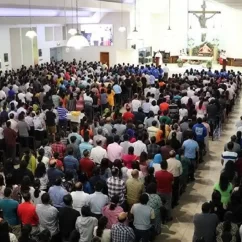
Twenty-five years ago, during the Great Jubilee of 2000, two million young Catholics gathered in Rome to celebrate World Youth Day.
A major event, a huge turnout—though the mass media at the time gave it a rather controversial reception.
Divisions during the 2000 WYD
For some reason, people spoke of the overwhelming crowd present, but also of the vast number of absentees, or of those demonstrating in other ways—since, during that same period, a demonstrative Gay Pride parade also took place in the very heart of Catholicism.
The starkest contrast, however, came when someone pointed out that on the Romagna coast—across an area roughly equivalent to that of Tor Vergata—just as many young people were crammed together in fornication as were gathered in Rome in penance.
The implication being that many young people had responded to Pope John Paul II’s call, but even more had stayed at the beach.
Youth of the Jubilee, a source of hope for secular society
With this year’s gathering, such contrasts have vanished.
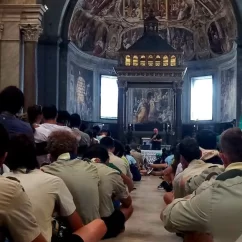
There are fewer young people now—though still nearly a million—as secularisation takes its toll and faith undergoes a process of purification. Yet even in reduced numbers, they are receiving an unprecedented degree of public recognition.
It’s not just clerics who are enthusiastically hailing this engaged Catholic youth as “the best generation,” but also many secular commentators and ordinary citizens who seem to be, in a sense, “cherishing” these young witnesses of an updated faith.
Because there is so much hope radiating from Tor Vergata.
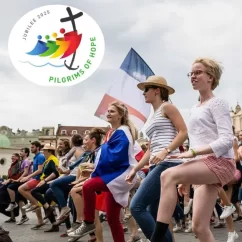
First and foremost, there’s the sense of encountering normal young people, also immersed in smartphones and virtual worlds, yet equally nourished by face-to-face relationships and constructive togetherness.
Young people with generally clean faces, but not naive; fewer tattoos and piercings than usual; with mostly serene and luminous expressions; happy to “be there” and to share in an experience of global faith and friendship.
A new way of interpreting the experience of faith
Young believers, then, who are not detached from the world, but must daily engage with peers who dismiss Jesus as fake news or view religious faith as something for “minors,” if not for the “mentally deficient”. For them, collective events like WYD become a space to reflect on a faith that opens up horizons unseen by others.
Moreover, theirs is a journey of faith (a searching, active faith), deeply rooted in the theme of peaceful coexistence among peoples, attuned to the great tragedies affecting humanity—from Gaza to Kyiv, from the planet’s ecological crisis to a world teeming with human discard.
Though orphaned of Francis, many of these young people are now fully in tune with Leo, from whom they draw strength, motivation, and trust, and to whom they offer support in his ongoing efforts to hold the world’s powerful to account. This is the protagonism of youth at the 2025 Jubilee.
They are nonetheless a unique crowd, participating not so much because of affiliation with a group (though many are), or due to the event’s institutional nature. But above all, because they are seekers of proposals and experiences that carry human, communal, and faith-based significance.
In this flexibility, one can glimpse a new way of interpreting religious experience—one that, rather than being shaped by individualistic impulses, seeks to affirm the values of authenticity.
Title: Those young Catholics, a source of hope even for secular society
Author





0 commenti a Those young Catholics, a source of hope even for secular society