
Prevost and Pachamama: The Truth Behind the Photos
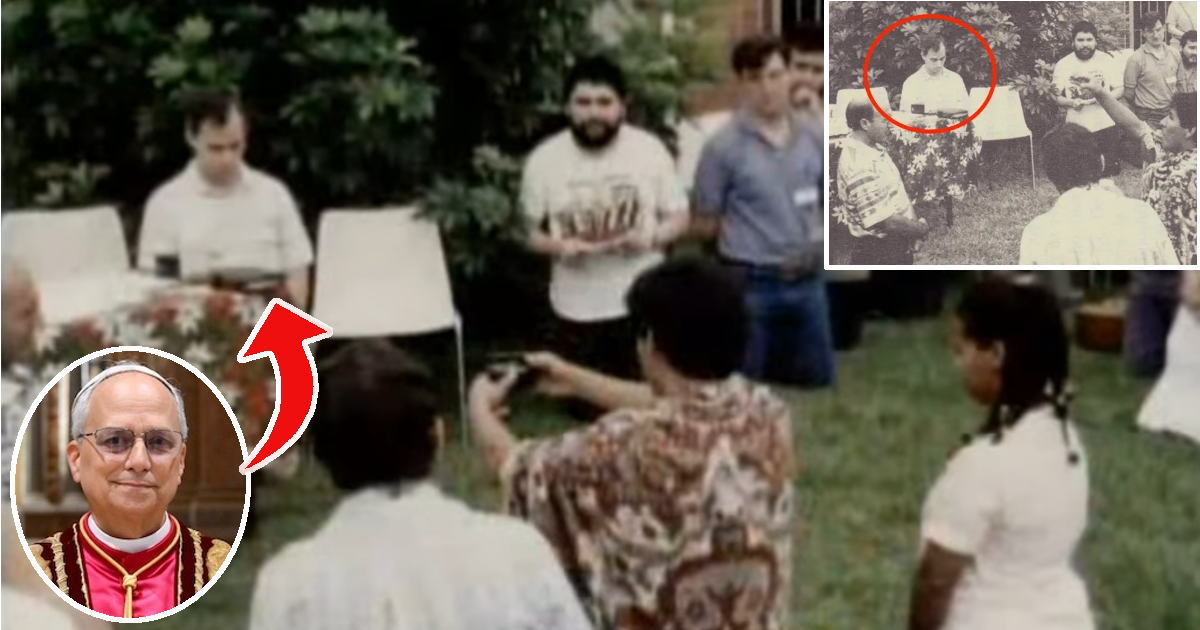
Commentary on images of Prevost kneeling before the Pachamama that have surfaced online. After investigating, we uncovered details that help clarify the situation.
A photograph is fueling the fire of controversy on the web.
The image, which no one in Italy has yet discussed, shows Robert Francis Prevost in 1995 kneeling during a pagan rite associated with the Pachamama, in the context of an Augustinian symposium held in São Paulo.
Rather than silencing the matter, we carried out a small investigation and thus formed a judgment after considering seven elements, which we summarize below.
Prevost kneeling before Pachamama?
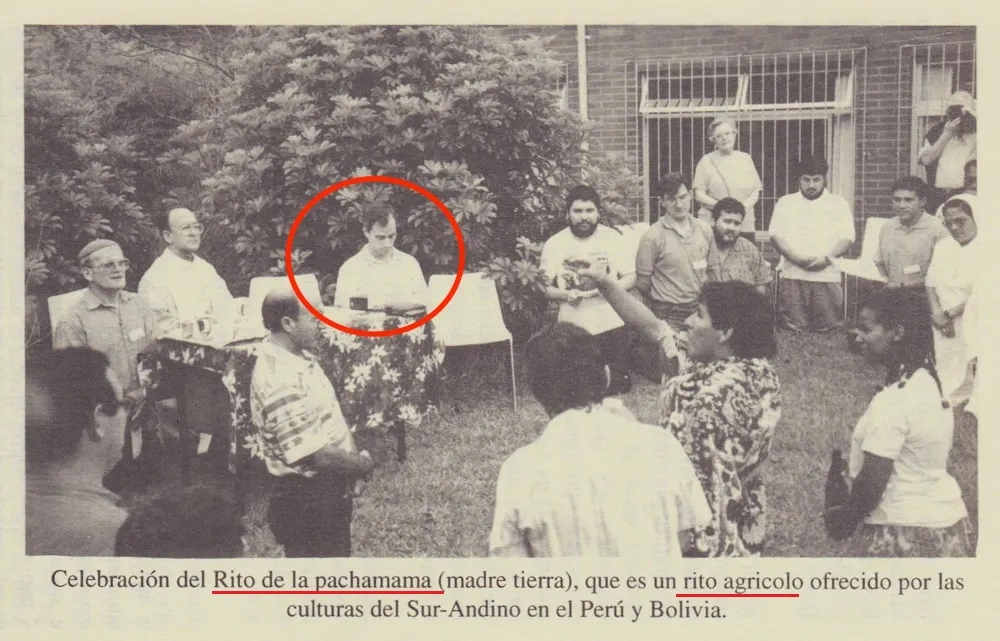
The photograph comes from the official proceedings of the conference held from January 23 to 28, 1995, titled “Ecoteología: Una Perspectiva desde San Agustín”.
Prevost was reportedly identified by some Augustinian religious, and the resemblance is strong: we will assume it is him.
The case was brought to light by Father Charles Murr, a priest linked to American traditionalist circles who claims to have had a role in the Roman Curia during the time of Paul VI (there is no documentary evidence).
Stay updated by subscribing to our new channels:


1) What the caption says
First of all, the caption accompanying the image describes the scene as “celebration of the Pachamama rite (mother earth)”, linked to Andean agricultural traditions.
One detail we noticed is that it speaks of an “agricultural rite” while making no reference to Pachamama as a “deity.” In fact, while “Rite” is capitalized, “pachamama” is written in lowercase.
Nor is explicitly religious language used, such as terms like “adoration,” “veneration,” “sacrifice,” etc.
Still, perplexity remains: the act of kneeling and participating in such a rite—even if agricultural and without explicit worship of a deity—remains controversial.
2) Pagan rite or educational symposium?
What if it was more of a didactic and instructional moment rather than a religious one?
Additional images of the event that we retrieved from YouTube point in this direction and help to contextualize the facts.
First of all, no statues or deities can be observed. In the “incriminated” scene, the objects present are a dark bottle containing liquid and a ciborium raised by the presumed celebrant.
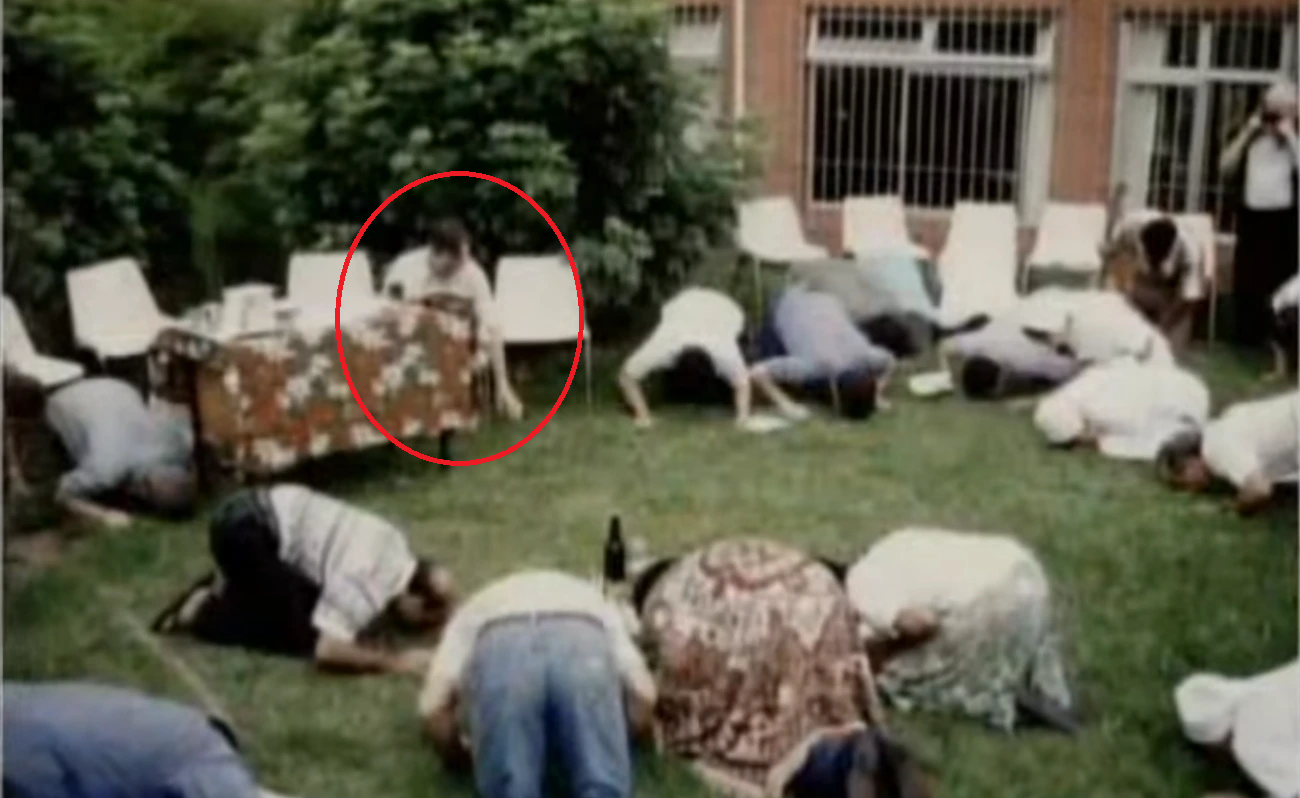
Another image, admittedly not very edifying, shows participants lying on the ground. The only one who does not appear in this posture is Prevost himself.
From the photo below, it can be seen that the other participants had already been lying on the ground for some time; he has not yet joined them and, from his body posture—and considering he was previously kneeling—it rather seems that he is getting up.
We discovered that the context of the “celebration” takes place within an academic symposium, a conference on rereading Saint Augustine “from a Latin American perspective.”
Participants held classroom lectures and then moved outdoors.
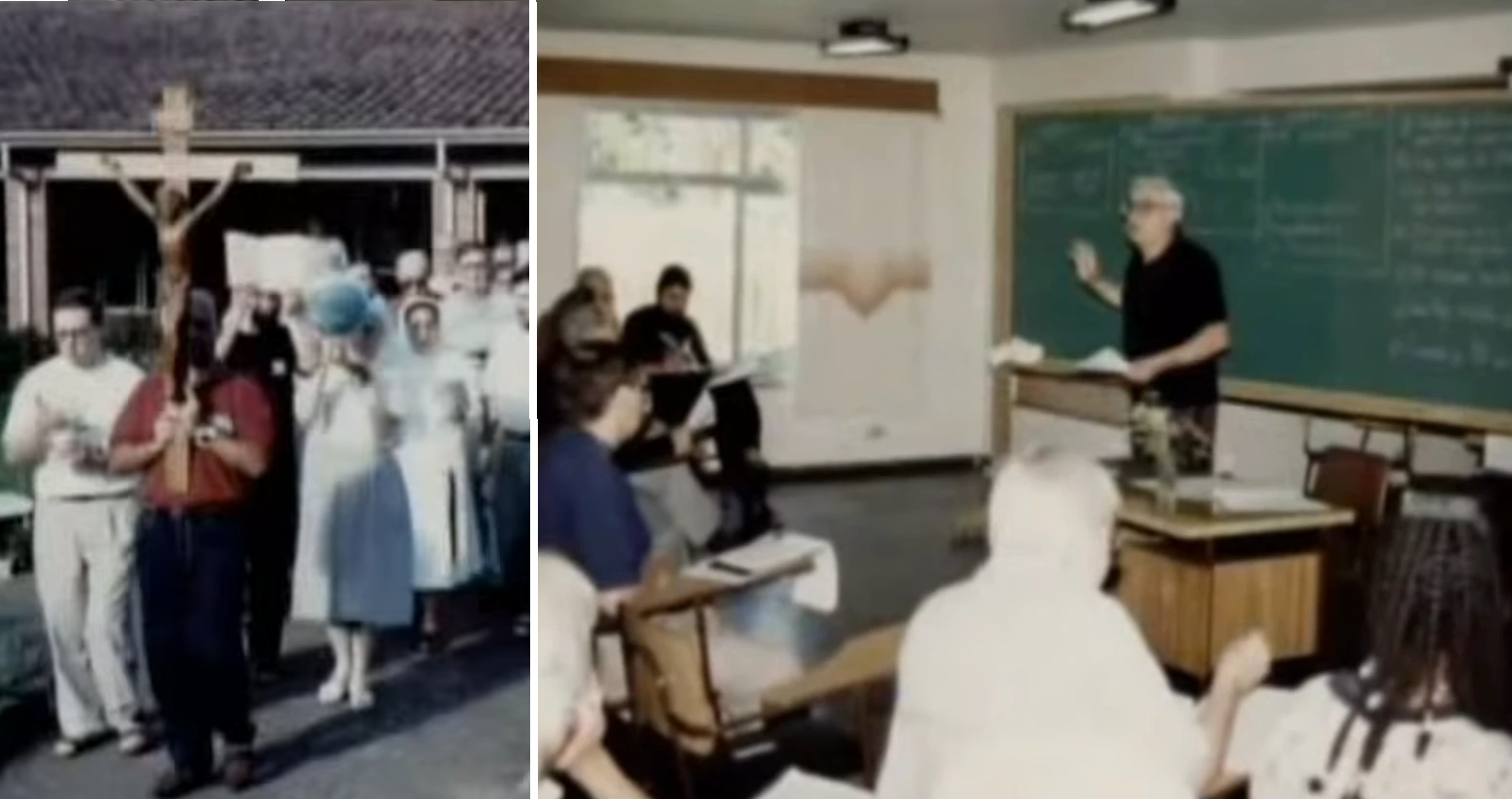
Other images reveal that there were also a procession and a Eucharistic celebration.
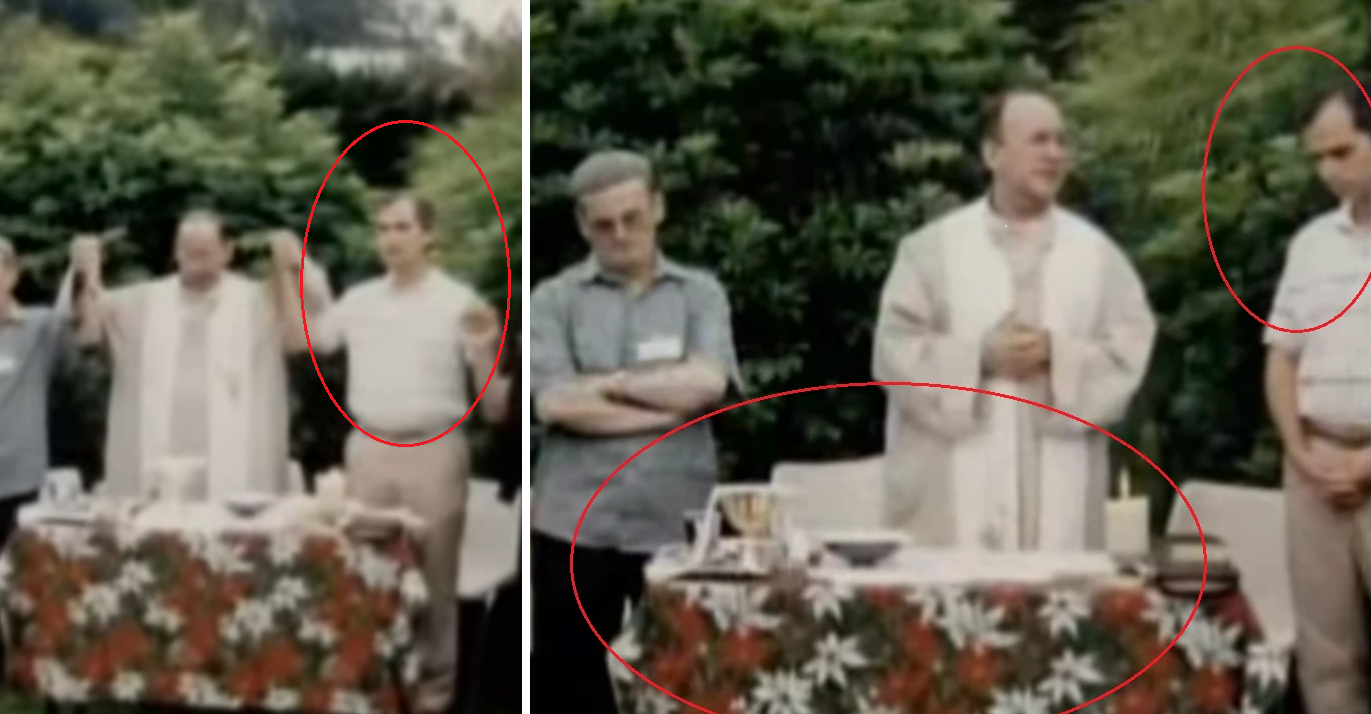
3) Informality and laughter
A detail that no one has noticed is that the atmosphere among some participants in the Pachamama rite is cheerful and amused.
This is evident from the laughter of an Augustinian and another man in the background. We have marked them with red circles.
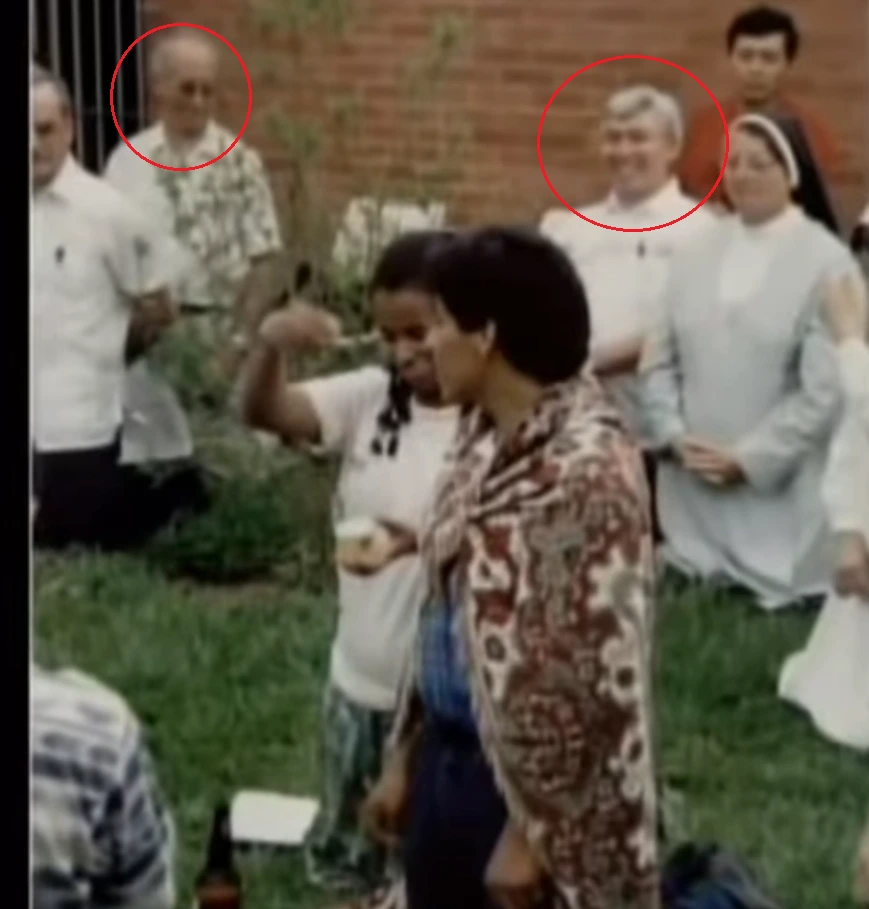
If it had truly been a sacred ritual, would they have been laughing? We doubt it.
4) Pachamama: deity or agricultural custom?
It should also be noted that while some Andean communities truly venerate Pachamama as a (pagan) deity, for others it is more like an agricultural or symbolic custom, without religious involvement.
Both the caption and the color images point in this direction.
5) Inculturation and ecumenism
Another element helps us place the images in their historical context.
It is 1995, and Robert Francis Prevost is not a leading figure in the Church, but a young and simple missionary in Peru.
Could the young Father Prevost have underestimated the situation? Could he have erred through excessive ecumenism? Could he have simply made a mistake in participating, realizing it only afterward? Certainly, without a doubt.
In any case, we cannot know his inner intentions.
It should also be said that the ecclesial climate of the time—especially in Latin America—was strongly marked by the theme of inculturation: the attempt, also promoted by the Magisterium, to engage with local cultures and be involved in their traditions and religiosity, without adopting their contents.
This is what the Jesuits also did during the colonial era within the famous Reductions in Paraguay. In that case, it proved to be an extremely effective method of Christian evangelization.
6) Leo XIV against Pachamama
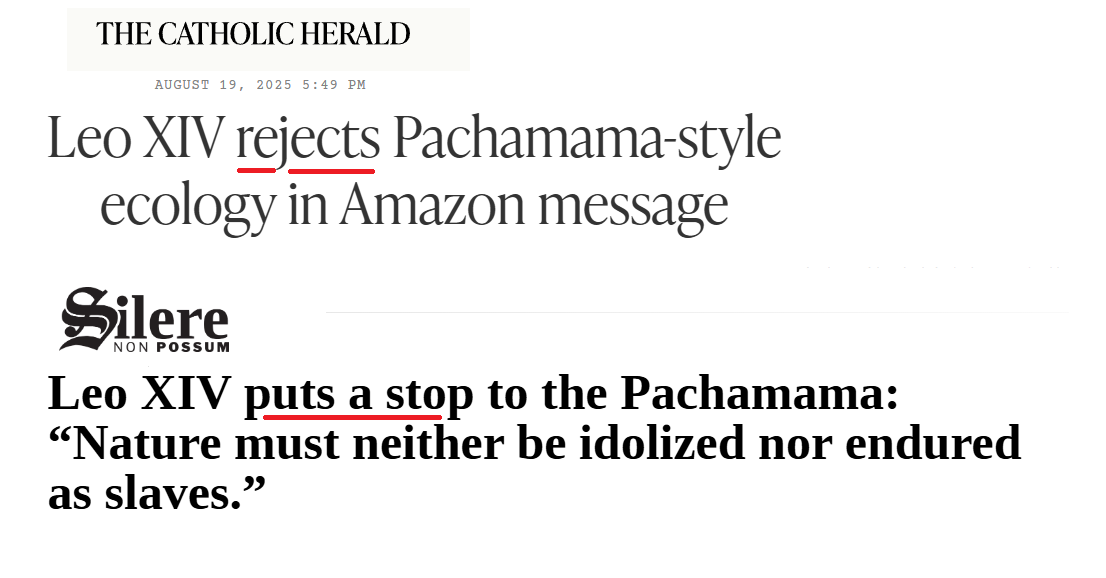
We also recall that Prevost himself, once he became Pope, clearly opposed the veneration of nature.
A year ago, addressing the bishops of the Amazon, he instructed them that “no one should submit to natural goods as a slave or a worshiper of nature, since these things have been given to us to reach our end of praising God and thus obtaining the salvation of our souls.”
7) JP II and BXVI, between the Qur’an and the mosque
One last point to consider.
Similar gestures to the one performed by Prevost in 1995 were seen more recently not from simple missionaries but from beloved Popes such as Paul VI, John Paul II, and Benedict XVI.
Paul VI, on July 25, 1967, entered the Grand Mosque of Istanbul, a former basilica that had been violated by Mehmed II with his famous entry on horseback. According to sources, the Pope knelt in prayer.
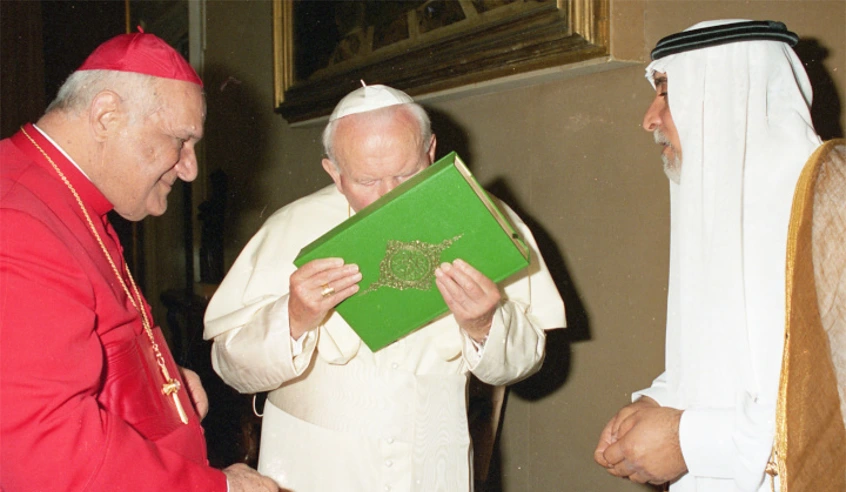
John Paul II, on May 14, 1999, during an interreligious meeting, was photographed kissing the Qur’an.
The gesture did not take place in mission territory, but in the Vatican.
Benedict XVI, on November 30, 2006, entered the Blue Mosque barefoot alongside the Mufti of Istanbul and prayed facing the mihrab, the niche indicating the direction of Mecca. At the end, the Pontiff turned to the Mufti saying: “Thank you for this moment of prayer.”
The then Vatican spokesman, Father Federico Lombardi, explained afterward:
“He did not make a prayer in a Christian form. Naturally, out of respect for others, one does not pray in the characteristic form of one’s own faith in a place designated for the public prayer of another faith. But that the Pope had a personal attitude of prayer is not strange. A moment of personal and intimate prayer.”
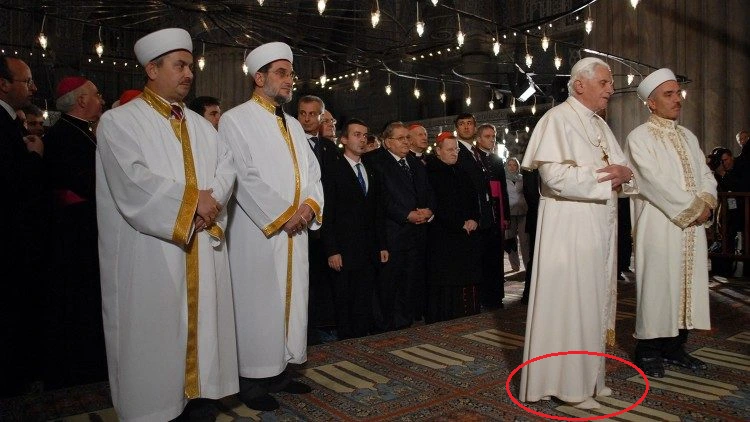
All these are gestures that sparked discussion but were officially interpreted as signs of respect and dialogue, not of syncretism.
Prevost and Pachamama: conclusion
We now come to the conclusion: what do we think?
We have tried to do what any reasonable and well-disposed person should do: analyze the case without prejudice, place it in context, and seek to understand it, avoiding the crude fanaticism of those who would like to turn Catholicism into a conspiratorial joke.
In light of what has been observed, it seems forced to turn a photograph from thirty years ago into proof of heresy or doctrinal deviation. The images alone do not allow us to determine what really happened, nor the inner intentions of the young Prevost.
The possible interpretations remain many: active participation in a didactic-religious symposium on the history and rites of Latin American indigenous peoples? Observation of a traditional rural rite? Religious involvement in a syncretistic act?
Kneeling remains a strong gesture: could Prevost have participated while remaining standing?
At the same time, however, we should ask: could Saint John Paul II have shown religious respect without kissing the Qur’an? Could Benedict XVI have visited the mosque without praying facing Mecca?
Everyone will give their own answer—provided they keep the full context in mind, without selecting only the most convenient elements.
Based on what has been presented so far, the image of Prevost at the Pachamama rite does not appear to be an act of religious worship.
Author


1 commenti a Prevost and Pachamama: The Truth Behind the Photos
Worship is an interior act and therefore, no one but the person himself can say what he was doing. As a Catholic, I presume the best in others unless proven otherwise. The conclusion that Pope Leo worshiped pachamama is merely sensational speculation.