
AIDS, Benedict XVI Condemned by the World but Defended by Scientists
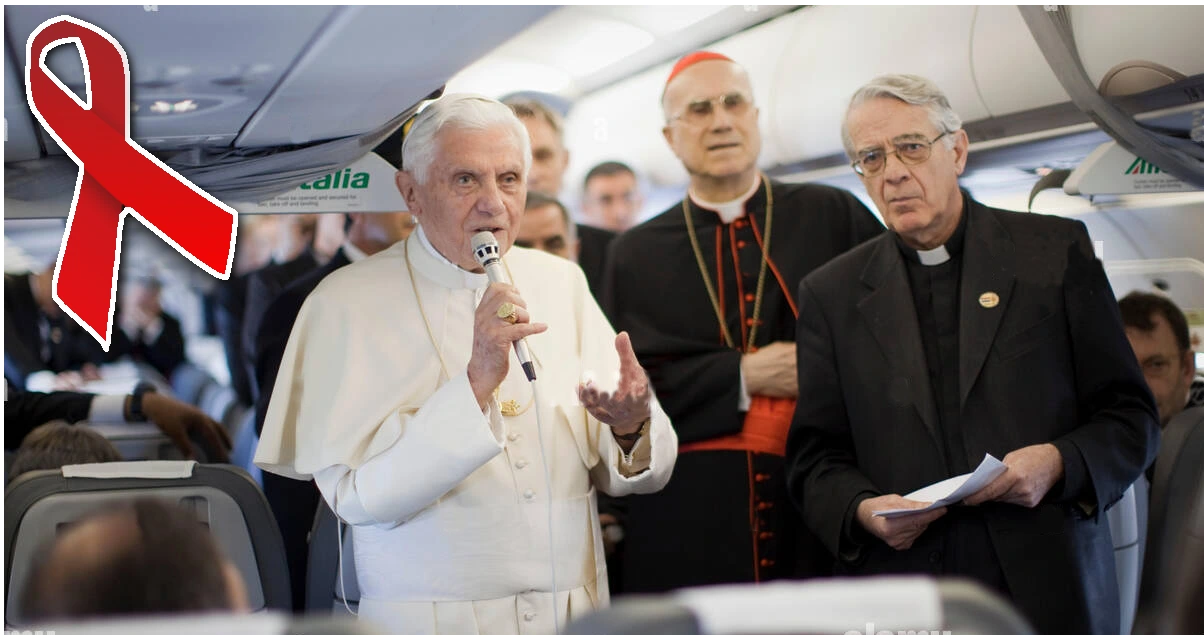
What did Benedict XVI say about AIDS and condoms that triggered an international controversy? The debate went on for months, and Harvard epidemiology experts came to his defense.
Today, December 1, the world marks the World AIDS Day.
Established in 1988, it aims to draw global attention to the HIV epidemic — the virus that can lead to acquired immunodeficiency syndrome (AIDS) — commemorate the victims, support those living with the disease, and continue promoting prevention, testing, and treatment.
The Church alongside people with AIDS
One of the most active supporters of people living with AIDS is certainly the Catholic Church.
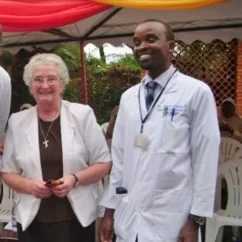
Just recently we reported the death of Sister Miriam Duggan, who spent more than half a century alongside the sick in Uganda, where she promoted a prevention program focused on changing social behaviors, including premarital abstinence and marital fidelity.
Her work contributed to a dramatic drop in infection rates from about 29% to under 10% between 1991 and 2002, and between 2006 and 2008 she was honored by Harvard University and the then-president of Uganda.
Benedict XVI on AIDS: criticism and support
The then Pope Benedict XVI certainly had Sister Duggan’s experience in mind when, on March 17, 2009, during his flight to Africa, he responded to a question about the spread of AIDS and the Catholic Church’s position.
His answer sparked an international firestorm, drawing criticism from political figures worldwide and even from within the Catholic community. The medical journal The Lancet also published a harsh editorial.
However, many scientists came forward to defend Benedict XVI’s words, including experts from Harvard University and Imperial College London, who explained the scientific and epidemiological basis of his remarks.
Particularly noteworthy was the strong endorsement by Edward Green, director of the prestigious AIDS Prevention Research Project at the Harvard School of Public Health and the Center for Population and Development Studies: “I am socially liberal, and it is difficult for me to admit this, but the Pope is actually right.”
Two epidemiology specialists — Jokin de Irala (University of Massachusetts and deputy director of the Department of Preventive Medicine at the University of Navarra, Spain) and René Ecochard (head of the Biostatistics Department at the University Hospital of Lyon) — also praised Benedict XVI’s remarks in an article in Le Monde, calling them “realistic.”
Additional support came, for example, from Daniel Halperin, professor of Public Health at Harvard University. In Italy, among many others, we recall the position taken by Carlo-Federico Perno, director of the Molecular Virology Unit at the Tor Vergata University Hospital.
Benedict XVI’s Words on AIDS and Condoms
But what exactly did Benedict XVI say about AIDS and the use of condoms that caused such an uproar?
Below is the full text of his words:
QUESTION – Your Holiness, among the many troubles afflicting Africa, there is also, and in particular, the spread of AIDS. The Catholic Church’s position on how to fight it is often considered unrealistic and ineffective. Will you address this issue during the trip?
ANSWER – I would say the opposite: I believe that the most effective presence on the front lines in the fight against AIDS is precisely the Catholic Church, with its movements and its various organizations.
I think of the Community of Sant’Egidio, which does so much, both visibly and invisibly, in combating AIDS; of the Camillians; of many other organizations; and of all the Sisters who devote themselves to the sick.
I would say that we cannot overcome the problem of AIDS solely with money—although money is necessary—because without the soul, without Africans helping (taking personal responsibility), the issue cannot be resolved through the distribution of condoms. On the contrary, they increase the problem.
The solution can only be twofold: first, a humanization of sexuality, that is, a spiritual and human renewal that leads to a new way of relating to one another; second, a true friendship, especially toward those who suffer—being willing, even at the cost of sacrifices and personal renunciations, to remain close to those who are suffering. These are the factors that help and bring about visible progress.
Therefore, I would say that our twofold strength lies in renewing the human person from within—giving spiritual and human strength for proper behavior toward one’s own body and that of others—and in cultivating the capacity to suffer with those who suffer, to remain present in moments of trial.
It seems to me that this is the right response, and the Church is doing this, thereby offering a great and significant contribution. We thank all those who carry out this work.
Author










0 commenti a AIDS, Benedict XVI Condemned by the World but Defended by Scientists